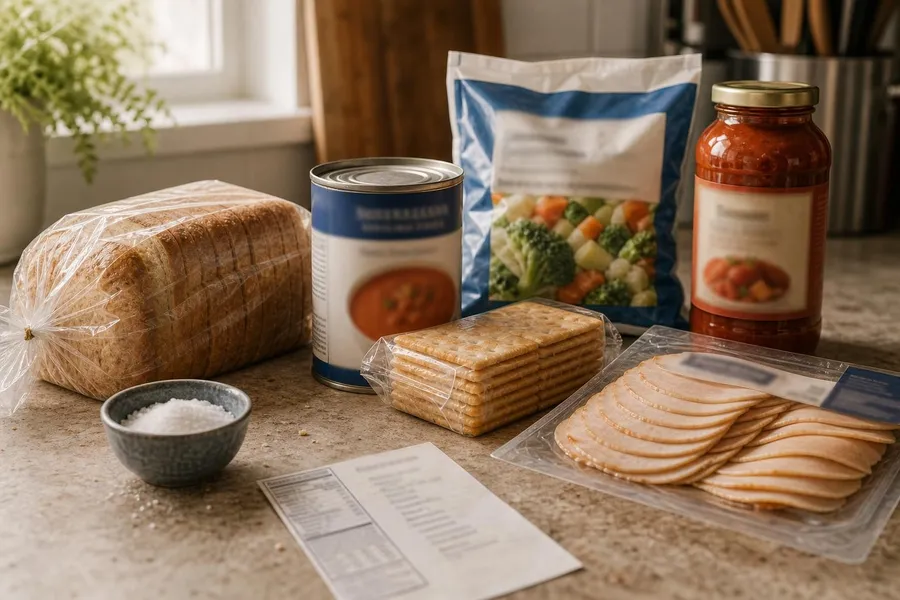
What is hidden sodium? Hidden sodium is the sodium already built into everyday packaged foods before you ever reach for the saltshaker. The biggest issue is not usually the pinch of salt added at the table, but the sodium in packaged bread, canned and boxed soups, pasta sauces, deli meats, frozen meals, condiments, snack foods, baking mixes, and seasoned products. This guide explains the main hidden sources of sodium in everyday packaged foods, how to read labels, which marketing claims actually matter, and practical lower-sodium swaps that fit a typical U.S. grocery cart.
Most sodium comes from packaged, prepared, and restaurant foods, not from salt added at home.
Bread, soups, sauces, snacks, pizza, deli meats, poultry, and cheese are common sodium contributors because people eat them often.
Use the Nutrition Facts label: 5% Daily Value or less is low for sodium, while 20% Daily Value or more is high per serving.
Better choices include no-salt-added canned goods, low-sodium broth, unsalted snacks, plain frozen vegetables, and sauces used in smaller amounts.
Why packaged foods can be sodium traps
Sodium helps packaged foods in several ways. Manufacturers use sodium-containing ingredients for flavor, texture, moisture retention, baking performance, curing, and preservation. That means sodium can appear in foods that do not taste especially salty, including sandwich bread, tortillas, muffins, pancakes, breakfast cereals, and refrigerated dough.
The FDA explains that sodium on a label includes salt plus sodium-containing additives such as monosodium glutamate, sodium bicarbonate, sodium nitrate, sodium nitrite, sodium citrate, and sodium benzoate. So a food can be a sodium source even when the ingredient list does not simply say salt.
For adults and teens age 14 and older, the federal daily limit is less than 2,300 milligrams of sodium. Many health organizations encourage some adults to aim lower, especially when managing blood pressure, but individual targets should come from a healthcare professional if you have kidney disease, heart failure, take certain medications, sweat heavily for work or athletics, or have been told to follow a specialized diet.
The everyday foods where sodium hides most often
Hidden sodium is often a frequency problem. A single slice of bread, a handful of crackers, or a tablespoon of dressing may not look alarming by itself. But when several packaged foods appear in the same day, sodium can stack up quickly. The CDC identifies processed and restaurant foods as major sources of sodium in the U.S. diet, with common contributors including soups, savory snacks, pizza, deli meat sandwiches, poultry, pasta mixed dishes, breads, rolls, buns, cheese, and vegetables that are packaged or processed with sodium.
Packaged food | Why sodium hides there | Smarter choice |
|---|---|---|
Bread, rolls, bagels, tortillas | Moderate sodium per serving adds up because these foods are eaten often. | Compare brands and pick the lowest sodium option with whole grains when possible. |
Canned soup, ramen, boxed broth | Salt and flavor packets can make one bowl a high-sodium meal. | Choose low-sodium or no-salt-added versions and use part of the seasoning packet. |
Pasta sauce, salsa, barbecue sauce | Sauces are concentrated and portions often exceed the serving size. | Look for no-salt-added tomato products and boost flavor with garlic, herbs, vinegar, or citrus. |
Chips, crackers, pretzels, popcorn | Seasoned coatings and frequent snacking can add sodium between meals. | Buy unsalted nuts, air-popped popcorn, or lower-sodium crackers. |
Deli meats, hot dogs, bacon, sausage | Curing and preservation rely heavily on sodium-containing ingredients. | Use smaller portions or choose fresh cooked chicken, turkey, beans, eggs, or tuna rinsed and drained. |
How to read the Nutrition Facts label for sodium
The fastest way to spot hidden sodium is to read the Nutrition Facts label. Start with the serving size, then check milligrams of sodium and Percent Daily Value. The label is based on one serving, but many packages contain more than one serving. If you eat two servings, you double the sodium listed.
Use Percent Daily Value as a quick filter
Percent Daily Value is useful because it gives context. A food with 5% Daily Value or less for sodium per serving is considered low. A food with 20% Daily Value or more is considered high. This does not mean every high-sodium food must disappear from your diet, but it should influence the rest of the day. If lunch includes a high-sodium canned soup, dinner should probably lean on fresh or plain frozen vegetables, unseasoned protein, and a simple starch rather than another packaged entree.
Check similar products side by side
Sodium levels can vary widely between brands of the same food. Two jars of marinara, two sandwich breads, or two frozen burritos may look similar but differ substantially in sodium. When shopping, compare products with similar serving sizes. The best choice is not always labeled as a diet food. Sometimes it is simply the brand with fewer milligrams of sodium and a short ingredient list.
What low-sodium package claims really mean
Front-of-package claims can help, but they can also mislead if you do not know the definitions. A product marked reduced sodium is not automatically low in sodium. It only means the product has less sodium than the regular version. If the original is very salty, the reduced version may still be high.
Label claim | What it means | How to use it |
|---|---|---|
Sodium-free or salt-free | Less than 5 mg sodium per serving. | Best for condiments, broths, and snacks when available. |
Very low sodium | 35 mg or less per serving. | Useful for building meals around naturally low-sodium foods. |
Low sodium | 140 mg or less per serving. | A strong label to look for in soups, canned vegetables, and packaged sides. |
Reduced sodium | At least 25% less sodium than the regular product. | Still check milligrams because it may not be low. |
No salt added or unsalted | No salt added during processing, but sodium may still be naturally present. | Great for canned tomatoes, beans, vegetables, nuts, and broth. |
The biggest hidden sodium categories in a U.S. kitchen
Bread, tortillas, and breakfast foods
Bread rarely tastes salty, but it can become a major sodium source because it appears at breakfast, lunch, and dinner. Sandwich bread, bagels, English muffins, biscuits, tortillas, frozen waffles, and pancake mixes all deserve a label check. Choose breads with lower sodium per slice, and pay attention to portion size. A sandwich with two slices of bread, deli turkey, cheese, mustard, and pickles can become sodium-heavy before any chips are added.
Soups, broths, and instant noodles
Canned soup and ramen are classic examples of hidden sodium because the serving size may be smaller than the amount people actually eat. A can that lists two servings may be eaten as one meal. Broths, bouillon cubes, soup bases, and seasoning packets also contribute sodium to homemade meals. Choose unsalted or low-sodium broth when cooking, then season with herbs, pepper, onion, garlic, lemon, vinegar, chili flakes, or a small measured amount of salt at the end.
Sauces, condiments, and dressings
Condiments are easy to underestimate because the serving size is small. Soy sauce, teriyaki sauce, hot sauce, barbecue sauce, ketchup, bottled salad dressing, salsa, mustard, pickles, relish, and jarred pasta sauce can all add sodium quickly. Rather than eliminating flavor, use stronger flavors in smaller amounts. Try vinegar, citrus juice, fresh herbs, garlic, ginger, smoked paprika, black pepper, or salt-free seasoning blends. For salads, oil and vinegar can be a lower-sodium alternative to bottled dressing.
Frozen meals and packaged entrees
Frozen pizza, burritos, mac and cheese, breaded chicken, pot pies, skillet meals, and microwave bowls can be convenient, but they often combine several sodium-rich components: dough, cheese, sauce, cured meats, breading, and seasoning. If you rely on frozen meals for budget or time reasons, compare labels and pair the entree with plain vegetables or fruit instead of another salty side. A lower-sodium frozen meal can still be practical, especially if it prevents takeout that would be even higher in sodium.
Simple swaps that reduce sodium without making food bland
Lowering sodium works best when it is gradual. Taste adapts over time, so you do not need to overhaul your pantry in one grocery trip. Start with the packaged foods you eat most often. If you eat bread daily, compare bread. If you cook with broth twice a week, switch broth. If you snack every afternoon, choose an unsalted or lower-sodium snack.
Swap regular canned vegetables for no-salt-added versions. If you buy regular canned vegetables or beans, drain and rinse them before using.
Replace seasoning packets with half the packet plus fresh flavor. Add scallions, lime, garlic, chili oil used sparingly, or herbs.
Build sandwiches with fewer salty layers. Use lower-sodium bread, fresh roasted chicken, avocado, lettuce, tomato, and a small amount of mustard.
Use plain frozen vegetables instead of sauced versions. Season them yourself so you control the sodium.
Measure condiments. A tablespoon here and there can matter, especially with soy sauce, dressing, barbecue sauce, and salsa.
A practical low-sodium grocery strategy
A lower-sodium cart does not have to be expensive. In the U.S., budget-friendly options often include dry beans and lentils, plain oats, brown rice, potatoes, eggs, frozen vegetables without sauce, fresh seasonal fruit, canned tuna or salmon labeled low sodium, and store-brand no-salt-added tomatoes. The goal is to create meals where packaged foods support the meal rather than dominate it.
For breakfast, choose plain oats, eggs with vegetables, yogurt with fruit, or lower-sodium whole-grain toast.
For lunch, use leftovers, bean bowls, salads with oil and vinegar, or sandwiches made with fewer processed meats.
For dinner, combine a simple protein, a starch, and vegetables, then add a measured amount of sauce or seasoning.
For snacks, rotate fruit, unsalted nuts, plain popcorn, fresh vegetables with hummus, or lower-sodium crackers.
The MyHealthfinder shopping list is a useful reference for building a lower-sodium pantry around foods such as fruits, vegetables, low-sodium canned goods, and less processed staples.
Common mistakes when trying to cut sodium
One common mistake is focusing only on obviously salty foods. Pickles, chips, and pretzels matter, but so do bread, tortillas, canned tomatoes, breakfast foods, cheese, and packaged chicken products. Another mistake is assuming organic, gluten-free, plant-based, or natural means low sodium. These terms do not guarantee anything about sodium. Always check the label.
A third mistake is removing salt without replacing flavor. Meals become boring, and the habit does not last. The more sustainable approach is to use herbs, spices, aromatics, acid, heat, and texture. Lemon juice, vinegar, roasted garlic, caramelized onions, cumin, coriander, paprika, basil, cilantro, parsley, and chili flakes can make food taste complete with less sodium.
The best sodium reduction plan is not the strictest one. It is the one that targets the packaged foods you eat most often and keeps meals enjoyable enough to repeat.
Frequently asked questions
What foods have the most hidden sodium?
Common hidden sodium sources include packaged bread, canned soup, deli meats, pizza, frozen meals, pasta sauce, cheese, crackers, chips, condiments, and seasoned poultry or meat products.
Is sea salt lower in sodium than table salt?
Not in a meaningful way for most diets. Sea salt and table salt both contain sodium. The size of the crystals can change how much fits in a spoon, but sodium still counts toward your daily intake.
How much sodium is too much per day?
For the general U.S. population age 14 and older, the federal recommendation is less than 2,300 mg of sodium per day. Some people may be advised by a healthcare professional to aim lower or follow a personalized target.
Does food have to taste salty to be high in sodium?
No. Bread, tortillas, pastries, cereals, and sauces may contain sodium without tasting very salty. The Nutrition Facts label is more reliable than taste.
Is reduced sodium the same as low sodium?
No. Reduced sodium means at least 25% less sodium than the regular version. Low sodium means 140 mg or less per serving. A reduced-sodium food can still be high in sodium.
Can rinsing canned beans or vegetables reduce sodium?
Yes, draining and rinsing canned beans or vegetables can remove some sodium. For the biggest reduction, choose no-salt-added or low-sodium versions when available.
Are frozen vegetables high in sodium?
Plain frozen vegetables are usually low in sodium. The sodium problem is more common in frozen vegetables with sauces, cheese, butter flavoring, or seasoning blends.
What is the easiest first step to lower sodium?
Pick one packaged food you eat every day, such as bread, soup, salad dressing, or snacks, and compare labels. Switching that staple to a lower-sodium option can reduce your intake with minimal effort.
Conclusion
Hidden sodium in everyday packaged foods matters because it accumulates quietly across meals and snacks. Bread, soups, sauces, deli meats, frozen entrees, snacks, cheese, and condiments can all push daily sodium higher than expected, even when food does not taste very salty. The most useful habits are simple: read the Nutrition Facts label, compare similar products, watch serving sizes, understand claims such as low sodium and reduced sodium, and use no-salt-added staples when possible.
You do not need a perfect pantry to make progress. Start with the packaged foods you buy most often, choose lower-sodium versions where they taste acceptable, and add flavor with herbs, spices, citrus, vinegar, garlic, and other aromatics. Over time, these small choices can make meals more balanced while keeping them practical, affordable, and enjoyable.
Sources
U.S. Food and Drug Administration: Sodium in Your Diet, including Daily Value guidance, label reading, sodium-containing ingredients, and package claims
Centers for Disease Control and Prevention: About Sodium and Health, including top sodium sources in U.S. diets and health context
American Heart Association: Sodium recommendations, label-reading advice, and definitions for common sodium claims
U.S. Department of Health and Human Services: Current Dietary Guidelines for Americans overview and federal nutrition guidance
MyHealthfinder: Lower-sodium foods shopping list for practical grocery choices