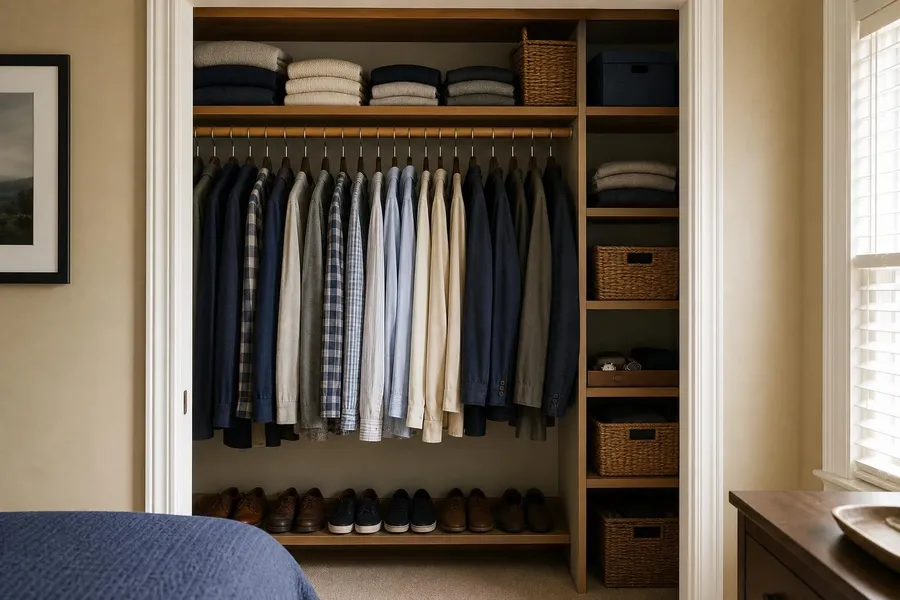
What is closet organization? Closet organization is the practical system you use to store clothing, shoes, accessories, laundry, and seasonal items so they are easy to see, reach, wear, and put away. A good system is not about having a picture-perfect closet. It is about making mornings easier by reducing decisions, keeping everyday outfits visible, and giving every item a consistent home. In this guide, you will learn how to sort your wardrobe, choose the right closet zones, use affordable storage tools, protect clothes, and maintain the setup with simple habits that fit real American homes, from reach-in apartment closets to larger walk-ins.
Start with use, not aesthetics: keep the items you wear most often at eye level and within easy reach.
Sort by category first: shirts, pants, dresses, shoes, accessories, laundry, and seasonal items should each have a defined place.
Declutter before buying bins: storage products work best after you know what actually needs to be stored.
Use vertical space safely: shelves, hooks, and stackable bins can help, but tall furniture should be secured according to safety guidance.
Build a reset routine: five minutes at night or once a week can keep the system from collapsing.
Why closet organization changes your morning routine
A disorganized closet creates friction before the day has really started. When shirts disappear behind sweaters, clean laundry never makes it back to hangers, or shoes are scattered on the floor, getting dressed becomes a search mission. Better closet organization reduces that friction by making choices visible and repeatable.
The goal is to make the easiest action the right action. If work shirts are already grouped together, jeans are folded in one stack, and the laundry hamper is close to where clothes come off, your closet begins to support your habits instead of fighting them. This matters in busy U.S. households where mornings often include commuting, school drop-off, remote work, gym bags, and shared bathrooms.
A useful closet is also forgiving. It should still work when you are tired, when laundry is not fully caught up, or when you have only ten minutes to get out the door. That means clear zones, fewer hidden piles, and storage that does not require perfection.
Start by editing what you own
Before buying hangers, bins, shelves, or a custom closet system, take inventory. Most closets feel too small because they are holding clothing from several versions of your life at once: office clothes you no longer wear, jeans that do not fit, event outfits with tags still attached, sentimental T-shirts, and seasonal pieces mixed into daily space.
Use four practical sorting groups
Keep: items that fit, feel good, match your current life, and get worn.
Repair or clean: pieces that need a button, tailoring, stain treatment, or dry cleaning before they can return to rotation.
Donate, sell, or give away: items in usable condition that no longer serve you.
Recycle or discard responsibly: worn-out textiles, damaged shoes, or items that cannot realistically be reused.
Try not to make decluttering a moral judgment. Clothes represent money, memories, body changes, jobs, and seasons. The useful question is simple: does this item earn space in the closet I use today? If the answer is no, move it out of the prime area. The U.S. Environmental Protection Agency notes that discarded clothing is a major source of textiles in municipal solid waste, so donation, resale, repair, and textile recycling are worth considering when items are still usable or recyclable.
Create closet zones that match how you get dressed
The best closet layout follows your real sequence in the morning. If you choose a shirt first, then pants, then shoes, your closet should make that path obvious. If you dress by activity, create zones for work, workouts, casual wear, and going out. If you share a closet, separate zones by person before separating by clothing type.
Closet zone | What belongs there | Best placement |
|---|---|---|
Daily wear | Work clothes, favorite jeans, everyday tops, uniforms | Eye level or main hanging rod |
Occasional wear | Formalwear, interview outfits, party clothes | Side rod, garment bag, or upper shelf |
Accessories | Belts, scarves, hats, jewelry, ties, small bags | Hooks, drawer dividers, clear bins, or door storage |
Shoes | Everyday pairs, dress shoes, sneakers, boots | Floor rack, shelf, cubby, or labeled boxes |
Seasonal storage | Winter coats, heavy sweaters, swimsuits, holiday clothing | Top shelf, under-bed bin, or separate storage area |
Zones work because they reduce visual noise. Instead of scanning the entire closet, your eyes go straight to the section that matches the day. For smaller closets, use the same idea on a reduced scale: one rod section for current clothing, one shelf for off-season items, one bin for accessories, and one hamper or basket for laundry.
Decide what to hang and what to fold
A closet becomes easier to maintain when each item has the right storage method. Hanging is best for items that wrinkle easily, need shape, or are chosen visually. Folding is better for knits, casual basics, workout wear, and items that stretch on hangers.
Hang these items
Button-down shirts, blouses, and lightweight tops that wrinkle.
Dresses, suits, blazers, and structured jackets.
Dress pants or trousers that hold a crease.
Items you forget to wear unless you can see them.
Fold these items
Sweaters and knits that can stretch on hangers.
T-shirts, leggings, sweatshirts, and athletic wear.
Jeans, shorts, and casual pants if rod space is limited.
Pajamas, loungewear, and base layers.
For folded clothes, avoid tall stacks that collapse. File folding in drawers or shallow bins can make every item visible from the top. If you prefer stacks, keep them low and category-specific. One pile of black T-shirts is manageable; a mixed pile of shirts, gym shorts, and sweaters quickly becomes a mess.
Use affordable storage tools that solve specific problems
Storage products can help, but they should be chosen after you know the problem. A $15 shelf divider can fix falling sweater stacks. A $25 over-the-door rack can handle belts, scarves, or caps. A $40 shoe rack can clear the closet floor. The wrong product, however, just creates a more expensive pile.
Problem | Low-cost solution | Typical U.S. budget range |
|---|---|---|
Clothes slide off mixed hangers | Matching slim hangers or sturdy wood hangers for coats | $15 to $40 per set |
Shoes cover the floor | Two-tier rack, cubbies, or clear shoe boxes | $20 to $80 |
Sweaters topple over | Shelf dividers or fabric bins | $10 to $35 |
Small accessories vanish | Drawer organizers, hooks, or labeled trays | $10 to $50 |
Seasonal items crowd daily space | Lidded bins, vacuum bags, or under-bed storage | $15 to $60 |
Measure before you shop. In U.S. homes, reach-in closet depths, shelf heights, and rod widths vary widely, especially in older houses and apartments. Measure width, depth, shelf clearance, door swing, and baseboard placement. Keep receipts until you have tested the product with actual clothes inside.
Make everything visible without overcrowding
Visibility is one of the strongest principles in closet organization. If you cannot see an item, you are less likely to wear it and more likely to buy a duplicate. The trick is to create visibility without overloading every inch.
Use a simple visual order: group by category, then by color if it helps. For example, place all short-sleeve tops together, then arrange light to dark. Do the same for pants, dresses, jackets, and sweaters. This is faster than creating a complicated system based on brand, fabric, or exact outfit combinations.
Leave breathing room on the rod. If hangers are packed so tightly that removing one shirt pulls out three others, the system will fail. A practical benchmark is being able to slide hangers with one hand. If you cannot, move rarely worn items to another zone, fold bulkier pieces, or do another edit.
Use labels where memory fails
Labels are especially useful for closed bins, shared closets, kids closets, guest closets, and high shelves. They do not need to be fancy. Painter tape and a marker can work during a trial period. Once the zones feel right, upgrade to printed labels if you want a cleaner look.
Organize laundry so clean clothes actually return to the closet
Many closet systems fail at the laundry stage. Clean clothes live in baskets, worn-once items pile on a chair, and dry-clean-only pieces sit in a bag for weeks. A morning-friendly closet needs a plan for clothes before and after washing.
Place a hamper where clothes naturally land, not where you wish they landed. If you change in the bedroom, keep the hamper in or near the closet. If kids change in the bathroom, use a bathroom hamper. For worn-once items, add a small hook, valet rod, or designated shelf so they do not mix with freshly laundered pieces.
Read care labels before sorting. The Federal Trade Commission explains that most textile and wool products sold in the United States must include care information so consumers know how to clean them. That matters for closet organization because proper care extends garment life and prevents the repair pile from becoming permanent clutter.
Protect clothes from damage, dust, and clutter
Closet organization is also about preservation. Clothes last longer when they are clean, dry, and stored with enough airflow. Avoid storing damp gym clothes, wet shoes, or freshly worn sweaters in closed bins. Moisture and trapped odors can make a closet feel stale and can damage fabrics over time.
Seasonal storage tips
Wash or dry clean items before storing them for months.
Use breathable garment bags for coats, suits, and formalwear.
Store heavy sweaters folded rather than hanging.
Keep storage bins off damp basement floors when possible.
Add a visible label with season, category, and size if items belong to children.
If you use a freestanding wardrobe, bookcase, or drawer unit inside or near the closet, think about safety as well as convenience. The U.S. Consumer Product Safety Commission encourages anchoring furniture with drawers, doors, and shelves to help prevent tip-over injuries, especially in homes with children. Storage should solve problems without creating new risks.
Build a closet system for different household needs
The right system depends on who uses the closet and how much space you have. A single adult in a studio apartment may need vertical storage and seasonal rotation. A family may need labels, shared laundry rules, and lower rods for children. Someone who works from home may need fewer formal pieces and more clear categories for casual clothing, fitness wear, and video-call-ready tops.
Small reach-in closets
Use one main rod for daily clothing, one upper shelf for labeled bins, and one door rack for accessories. Choose slim hangers to create more horizontal space, but do not overpack the rod. If shoes are the biggest issue, dedicate the floor to shoes only and move bulky storage elsewhere.
Walk-in closets
Walk-ins can become hidden storage rooms if zones are not clear. Keep the first wall or most visible section for daily wear. Put formalwear, luggage, keepsakes, and seasonal bins farther back. If the closet has drawers, assign them by category rather than mixing socks, belts, and workout clothes in one drawer.
Kids closets
Make the system low, visual, and simple. Use picture labels for young children, open bins for pajamas and play clothes, and a low hook for tomorrow’s outfit. Rotate outgrown sizes quickly so drawers do not become frustrating. For school mornings, a five-outfit weekly section can reduce arguments and decision fatigue.
Avoid common closet organization mistakes
Most closet problems come from systems that look good for a day but are too complicated to maintain. If every sweater must be folded perfectly, every shoe must return to a narrow box, and every accessory has a tiny slot, the setup may fail during a busy week.
Buying organizers first: declutter and measure before spending money.
Storing by fantasy lifestyle: give prime space to the clothes you actually wear, not the ones you wish you wore.
Ignoring laundry habits: if clean clothes never get put away, simplify folding and hanging routines.
Overusing closed bins: bins are helpful for seasonal items but can hide daily essentials.
Keeping every maybe item: too many uncertain pieces make the useful clothes harder to find.
A better approach is to test the system for two weeks. If you keep dropping scarves on a chair, add a hook where the chair is. If workout clothes stay in a laundry basket, use an open bin instead of a drawer. Organization improves when it responds to behavior.
A simple weekend plan to organize your closet
You do not need a full renovation to make mornings easier. A focused weekend reset can transform the way the closet works, especially if you keep the scope realistic.
Empty one section at a time: start with hanging clothes, shelves, shoes, or drawers, not everything at once.
Sort quickly: keep, repair, donate, recycle, or relocate each item.
Clean the space: vacuum the floor, wipe shelves, and check for broken hangers or loose hardware.
Create zones: put daily wear in the easiest space and occasional items farther away.
Add only needed tools: choose hangers, bins, hooks, or dividers that solve the problems you found.
Schedule a reset: set a weekly or monthly reminder to return items to their zones.
If the project feels overwhelming, start with the morning zone only. Organize the clothes you wear Monday through Friday, your most-used shoes, and your laundry flow. Even that smaller improvement can save time every day.
How to maintain the system in five minutes a day
Maintenance is easier than another major cleanout. A daily five-minute reset can include hanging clean shirts, returning shoes to the rack, moving laundry to the hamper, and pulling tomorrow’s outfit forward. The point is not to make the closet perfect. The point is to prevent small disorder from becoming a weekend project.
Try a one-in, one-out habit for categories that overflow, such as T-shirts, jeans, shoes, or workout clothes. When a new pair of sneakers comes in, choose an older pair to donate, recycle, or retire. Review seasonal items twice a year, ideally when weather changes in spring and fall. This keeps the closet aligned with your real life.
For shared closets, agree on visible boundaries. One person’s overflow should not swallow the other person’s space. Use separate rods, separate bins, or labeled shelves. The clearer the boundary, the fewer daily negotiations the closet creates.
Frequently asked questions
What is the easiest way to start organizing a closet?
Start with one category, such as shirts or shoes. Remove only that category, decide what to keep, then return the best items to the easiest-to-reach space. Small sections prevent the project from becoming overwhelming.
Should I organize clothes by color or by type?
Organize by type first, then by color if it helps you find things faster. Category is usually more useful because it matches how people get dressed.
How often should I declutter my closet?
A light review every season works well for most households. Do a deeper edit once or twice a year, especially before buying new clothes or switching from warm-weather to cold-weather clothing.
Are matching hangers worth it?
Matching hangers can make a closet look calmer and help clothes hang at the same height. They are worth it if your current hangers are bulky, broken, or inconsistent, but they are not a substitute for decluttering.
What should I do with clothes I rarely wear but still need?
Move them out of prime space. Store formalwear, specialty clothing, and seasonal pieces on a high shelf, side rod, garment bag, or labeled bin so daily clothes remain easy to reach.
How do I organize a small closet on a budget?
Use slim hangers, shelf dividers, hooks, and one or two labeled bins before investing in a larger system. Focus on vertical space and keep only current-season clothing in the main closet.
What is the best way to organize shoes?
Keep everyday shoes visible and easy to grab. Use a floor rack, cubbies, clear boxes, or shelves. Store special-occasion shoes higher up or in labeled boxes.
How can I keep my closet organized long term?
Build a reset habit. Put away laundry promptly, return shoes daily, keep a donation bag nearby, and review crowded categories before buying more.
Conclusion: make the closet support the morning you actually have
The best closet organization system is simple, visible, and easy to maintain. It starts with editing what you own, then assigning clear zones for daily wear, occasional clothing, shoes, accessories, laundry, and seasonal storage. From there, the right hangers, bins, hooks, and shelves can make the system easier to use, but only if they solve a real problem.
You do not need a luxury walk-in or a custom installation to make mornings smoother. A small reach-in closet can work beautifully when the most-used items are visible, the floor is clear, and the laundry routine is realistic. Focus on reducing decisions, not creating perfection. When every item has a practical home, getting dressed becomes faster, calmer, and more predictable.
Sources
U.S. Environmental Protection Agency: Textiles material-specific data and information on discarded clothing in municipal solid waste.
Federal Trade Commission: Apparel labeling and care-label information for clothing and textile products in the United States.
U.S. Consumer Product Safety Commission: Anchor It campaign guidance on preventing furniture and TV tip-over injuries.
National Association of Productivity & Organizing Professionals: Get Organized & Be Productive Month resources and professional organizing context.