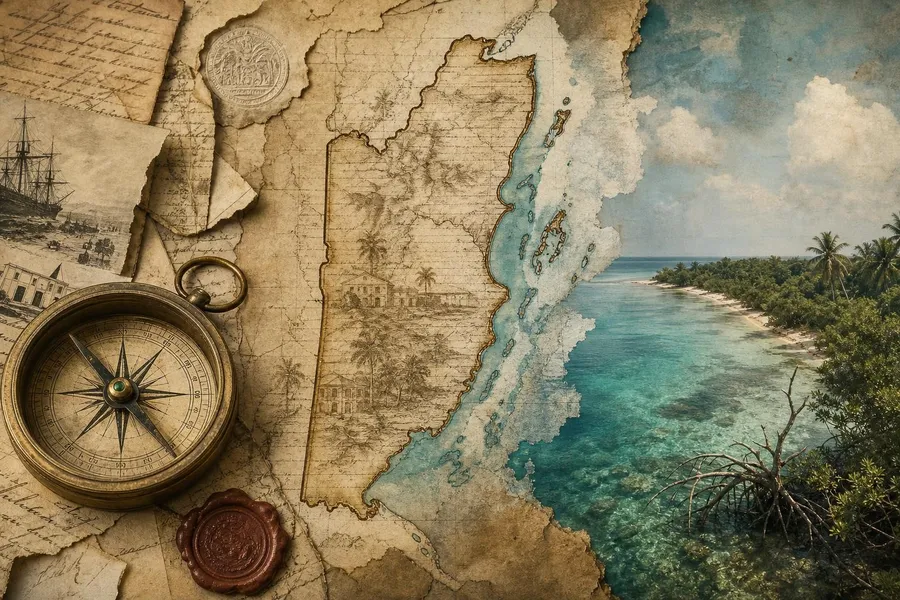
What is British Honduras? British Honduras was the colonial name used for Belize before the country restored the name Belize in 1973 and gained full independence on 21 September 1981. The story behind Belize’s old name British Honduras begins with British timber interests on the Caribbean coast of Central America, the wider Bay of Honduras, and the slow growth of a settlement that later became a Crown colony. This article explains where the name came from, why it mattered, why it still appears in old maps and records, and how the change to Belize reflected a wider movement toward national identity, self-government and independence.
Quick summary
British Honduras was the colonial name for the territory now known as Belize.
The word “Honduras” referred to the Bay of Honduras region, not to the modern Republic of Honduras.
The British presence grew from logwood and mahogany cutting, supported by enslaved African labour and later colonial administration.
The colony’s name was changed to Belize on 1 June 1973, before independence in 1981.
The old name still appears in census papers, land records, maps, stamps, family documents and archival catalogues.
Why was Belize once called British Honduras?
Belize was called British Honduras because the British settlement developed along the Bay of Honduras and eventually came under British colonial authority. The name joined two ideas: “British”, meaning rule or protection by Britain, and “Honduras”, referring to the wider coastal and maritime area known to European mapmakers as the Bay of Honduras.
In early European usage, the Bay of Honduras described a broad Caribbean zone touching parts of what are now Belize, Guatemala and Honduras. This is why the old name can be confusing today. British Honduras was not the same place as the country now called Honduras. It was the British-administered settlement that became Belize.
The name also reflected how colonial powers understood territory from the sea. For timber cutters, traders and officials, the coast, rivers and access to shipping mattered greatly. Names on maps often followed bays, river mouths and trading routes, rather than the cultural boundaries that local communities recognised.
The Baymen, timber and the roots of the colony
The early British presence in Belize was tied to timber. European demand for logwood, used in dye-making, and later mahogany, used for furniture and shipbuilding, drew British settlers and traders to the area. These settlers became known as Baymen, a term connected to the Bay of Honduras.
The timber economy was not a simple frontier story. It depended heavily on enslaved Africans and their descendants, whose labour made the extraction, transport and export of timber possible. Rivers such as the Belize River served as working routes from inland forests to coastal shipping points. The settlement’s wealth, social structure and landholding patterns were shaped by this timber system.
This history helps explain why the name British Honduras carried more than geography. It marked a colonial economy built around external trade, imperial protection and unequal control over labour and land. Understanding the old name therefore means looking not only at British officials, but also at African, Maya, Garifuna, Mestizo and other communities whose experiences formed Belizean society.
From settlement to Crown colony
For a long period, the British presence in Belize existed in a complicated legal position. Spain claimed sovereignty over the wider area, while British settlers maintained timber-cutting operations under agreements and practical arrangements. Over time, British authority became stronger through local institutions, superintendents, courts and later formal colonial administration.
By the nineteenth century, the settlement was increasingly treated as a British possession. In 1862, it became the Crown colony of British Honduras. That change mattered because it placed the territory more firmly inside the British imperial system, with colonial governors, official departments and laws shaped by London and regional colonial practice.
The colonial label appeared on official notices, legal papers, postage, government reports, school materials and maps. For people researching family history today, this is one reason old documents may say “British Honduras” even when they are clearly about Belize City, Orange Walk, Corozal, Stann Creek, Toledo, Cayo or other Belizean places.
Key dates in the name change from British Honduras to Belize
Period or date | What happened | Why it matters |
|---|---|---|
Seventeenth century | British timber cutters became active along the Bay of Honduras. | This created the settlement that later grew into colonial Belize. |
1862 | The territory became the Crown colony of British Honduras. | The old name became a formal colonial title used in law and administration. |
1964 | Internal self-government was introduced under a new constitutional arrangement. | Local elected leadership gained greater control over domestic affairs. |
1 June 1973 | The official name changed from British Honduras to Belize. | The change signalled national identity and the approach of independence. |
21 September 1981 | Belize became an independent state. | The country entered the international community under its restored national name. |
Why did the name change to Belize in 1973?
The change from British Honduras to Belize was not only administrative. It was part of a national and political shift. By the late colonial period, Belizean leaders and communities were working toward self-government, international recognition and eventual independence. A name tied to British colonial rule no longer matched the direction of the country.
“Belize” had long been used locally, especially for Belize Town, the Belize River and the wider territory. Restoring that name gave the country a stronger identity of its own. It helped separate Belize from confusion with Honduras and made the future independent state easier to identify internationally.
The timing is important. The name changed on 1 June 1973, eight years before independence. That means documents between 1973 and 1981 may refer to Belize even though the country was still not fully independent. The name Belize therefore belongs both to the late self-governing period and to the independent nation that followed.
What did “Honduras” mean in British Honduras?
In the old colonial name, “Honduras” referred to the Bay of Honduras and the wider coastal geography known to European navigators. The Spanish word is commonly associated with “depths”, a reference often linked to deep waters off parts of the coast. Over time, the term became attached to places around the western Caribbean.
This is why British Honduras and Honduras can be mistaken for each other in family searches and online databases. If an old record says a person was born in British Honduras, it normally means Belize, not the Republic of Honduras. Likewise, a map showing British Honduras along the Caribbean coast between Mexico and Guatemala is showing colonial Belize.
A practical way to read old records
Check the date first. Before 1 June 1973, official records usually used British Honduras.
Look for place names such as Belize Town, Corozal, Orange Walk, Stann Creek, Toledo or Cayo.
Do not assume “Honduras” means the modern neighbouring country unless the document clearly says so.
Compare the record with maps, census listings or church registers from the same period.
Why the old name still appears today
British Honduras still appears because archives preserve records under the names used when those records were created. A census taken in the colonial period, a land grant, a birth entry, a school report or a government notice may keep its original wording. Changing every historic label would make research harder and could distort the record.
The old name is especially common in genealogical databases, library catalogues, colonial reports, legal citations, shipping documents, missionary records, stamps and historical maps. It may also appear in foreign archives because Britain, the United States and international organisations used the colonial name in diplomatic and administrative files.
For Belizean readers, the label can feel distant or uncomfortable because it belongs to a colonial system. Still, recognising it is useful. It helps families trace ancestors, students understand textbooks, and researchers connect older documents to present-day Belize.
British Honduras, Belize and national identity
The move from British Honduras to Belize was also a change in how the country spoke about itself. A colonial name centres the imperial power. A national name centres the people and place. Belize’s modern identity includes Indigenous Maya roots, African and Kriol heritage, Garifuna history, Mestizo communities, East Indian, Chinese, Mennonite and other contributions, and a Caribbean and Central American position that is unique in the region.
The name Belize does not erase the colonial past. Instead, it gives people a clearer way to discuss it. British Honduras describes a historical period and system. Belize describes the country that emerged from that history, with its own institutions, symbols, debates and shared future.
This distinction is important in schools and public history. Students should know that British Honduras was not an ancient national name, but a colonial label. They should also understand that Belize did not suddenly appear in 1981. The country’s society, culture and political movement developed over many generations before independence.
Common mistakes about the name British Honduras
Because the name includes “Honduras”, mistakes are common. Some people think Belize used to be part of Honduras. Others assume British Honduras was located in South America or that the name changed only on Independence Day. These errors are easy to correct once the timeline is clear.
Mistakes to avoid
Do not treat British Honduras as the same country as Honduras. It was colonial Belize.
Do not say the name changed in 1981. The official name Belize was adopted in 1973.
Do not describe the old name as harmless only. It was tied to colonial power, land control and labour exploitation.
Do not ignore local names and communities that existed before and during British rule.
Do not remove the old name from historical quotations or archive references, because it helps identify the original record.
How to explain British Honduras in one clear sentence
British Honduras was the colonial name for Belize, used under British rule until the country officially restored the name Belize on 1 June 1973, ahead of independence on 21 September 1981.
That sentence is useful for school assignments, family history notes, museum labels and quick explanations. It keeps the main facts together: the old name, the modern country, the colonial setting, the 1973 name change and the 1981 independence date.
Frequently asked questions
Was Belize part of Honduras?
No. Belize was not part of the modern Republic of Honduras. The name British Honduras referred to the Bay of Honduras region and to the British colony that later became Belize.
When did British Honduras become Belize?
The official name changed from British Honduras to Belize on 1 June 1973. Belize later became independent on 21 September 1981.
Why did Britain call it British Honduras?
The name combined British colonial control with the geographical term Bay of Honduras, which European navigators and mapmakers used for the wider western Caribbean coastal area.
Why is the old name still on maps and documents?
Historic records normally keep the name used at the time they were created. That is why colonial-era maps, census records, stamps, land papers and government reports may still say British Honduras.
Is British Honduras an offensive term?
It is a historical colonial term. It is appropriate when discussing records, maps and the colonial period, but Belize is the correct name for the country today.
Did the name change happen at independence?
No. The name changed in 1973, eight years before independence. On Independence Day in 1981, the country was already officially called Belize.
What should I write if an ancestor was born in British Honduras?
For clarity, you can write “British Honduras, now Belize” or “Belize, formerly British Honduras”, especially in family trees, research notes and captions.
What is the difference between Belize Town and Belize?
Belize Town, now Belize City, was the main settlement and former capital. Belize is the name of the country. The wider national name became official in 1973.
Conclusion
The story behind Belize’s old name British Honduras is a story of geography, timber, empire and national identity. The name came from British activity around the Bay of Honduras and became formal during the colonial period, especially after the territory became a Crown colony in 1862. It stayed in official use until 1 June 1973, when Belize restored a name that better represented the country’s people and future.
Knowing this history makes old records easier to understand and helps avoid confusion with Honduras. It also reminds us that names carry power. British Honduras belongs to the archive of colonial rule. Belize is the name of the independent country that grew beyond that label while still carrying the responsibility to understand its past honestly.
Sources
Belize Archives and Records Service: British Honduras Newsletter archive, including 1973 name-change references
Statistical Institute of Belize: History of censuses in Belize and earlier official names
Government of the United Kingdom: Timeline of country name changes in UK government use
Office of the Historian, U.S. Department of State: Belize country history and diplomatic background
Library of Congress: Historic material catalogued under British Honduras