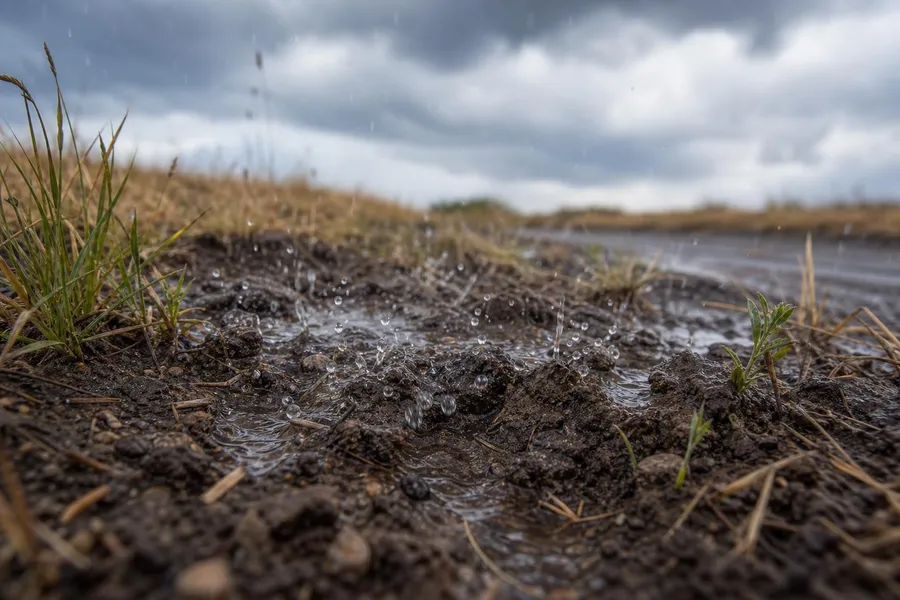
What is petrichor? Petrichor is the earthy, slightly mineral smell that often rises when rain falls on dry soil, pavement, or rocks after a dry spell. The scent is not the smell of rainwater itself. It comes from a mix of plant oils, soil compounds, and bacterial byproducts that are lifted into the air when raindrops hit dry ground. In this guide, you will learn why rain smells earthy after a dry spell, what causes it, why the odor is stronger in some places, and when the smell may signal something other than ordinary fresh rain.
Main cause: The smell comes from compounds on dry soil and surfaces, especially geosmin, plant oils, and sometimes ozone.
Why dry spells matter: Dry weather allows oils and soil compounds to build up, so the first rain can release a stronger scent.
How it gets into the air: Raindrops trap tiny air bubbles on porous ground; when those bubbles burst, they launch aromatic aerosols.
Where it is strongest: Gardens, forests, fields, clay soils, dusty roads, and warm sidewalks often produce a noticeable after-rain smell.
Why rain smells earthy after a dry spell
Rain smells earthy after a dry spell because dry surfaces accumulate aromatic material. Plants release oils and other organic compounds during dry periods, while soil microbes produce earthy-smelling chemicals as part of their life cycles. When rain finally arrives, those compounds are loosened and carried into the air.
The effect is especially noticeable after several hot, dry days because the ground has had time to collect dust, plant residue, pollen, and microbial compounds. A brief shower after a drought can smell stronger than steady rain during an already wet week because the first drops are interacting with a concentrated layer of material on the surface.
The earthy smell after rain is therefore a surface reaction, not a property of water falling from clouds. Clean rainwater has little odor by itself. The familiar scent appears when that water touches soil, vegetation, rock, concrete, asphalt, mulch, or dust.
The main ingredients behind the smell of rain
Several sources combine to create petrichor. The balance changes from place to place, which is why rain can smell different in a desert neighborhood, a suburban lawn, a pine forest, or a downtown street.
Ingredient | Where it comes from | How it affects the smell |
|---|---|---|
Geosmin | Soil bacteria, especially actinomycetes such as Streptomyces | Creates the classic earthy, damp-soil aroma |
Plant oils | Leaves, grasses, shrubs, and trees during dry weather | Adds a green, herbal, woody, or slightly sweet note |
Ozone | Electrical activity and atmospheric chemistry before some storms | Contributes a sharp, clean, electric smell before or during storms |
Dust and mineral particles | Dry soil, clay, rock, concrete, and road surfaces | Gives the scent a dry, chalky, or mineral quality |
Geosmin: the earthy note people recognize first
Geosmin is one of the most important compounds in the smell of rain. It is produced by soil-dwelling microorganisms and has a powerful earthy odor that humans can detect at very low concentrations. That is why even a small amount released from soil can seem surprisingly strong.
The American Chemical Society describes petrichor as a mixture involving geosmin, plant oils, and ozone. This is a useful way to understand the scent: it is not one molecule, but a blend, with geosmin often playing the starring role.
Plant oils: the dry-weather buildup
During dry periods, plants can release oils and volatile compounds that settle into soil, rocks, mulch, and pavement. These substances are part of the smell people associate with the first rain after a hot spell. In a wooded area, the scent may seem resinous or leafy. Near lawns or gardens, it can smell green and fresh. In dry regions of the western and southwestern United States, rain on creosote bush, sagebrush, dusty soil, or warm rock can create especially distinctive aromas.
Ozone: the sharp smell before some storms
Some people say they can smell rain before it arrives. In certain storms, part of that impression may come from ozone, which has a sharp, clean smell. Winds can carry ozone and storm-related air from higher altitudes or from areas where electrical activity has occurred. This is different from the damp-soil smell that rises when raindrops strike the ground, but both can be part of the overall rain experience.
How raindrops release the scent into the air
The smell becomes airborne through a physical process. When a raindrop hits porous soil or another rough surface, it can trap tiny pockets of air. Those pockets form bubbles inside the thin film of water created by the impact. As the bubbles rise and burst, they send microscopic droplets into the air. These droplets, called aerosols, can carry aromatic compounds from the ground to your nose.
Researchers at MIT News reported that high-speed imaging showed this bubble-forming and bursting process when drops hit porous surfaces. The related study in Nature Communications helps explain why light or moderate rain can be better at releasing petrichor than a violent downpour.
Heavy rain can wash compounds away quickly and create too much turbulence for the scent to linger near the ground. A gentle shower, by contrast, gives drops time to strike dry soil, create aerosols, and allow those particles to drift through the air.
Why the first rain often smells stronger than later rain
The first rain after a dry spell is usually the most fragrant because it releases what has accumulated. Once the surface layer has been rinsed, later rainfall has less stored material to lift into the air. This is why the first few minutes of a summer shower can smell intense, while an all-day rain may smell muted or simply damp.
Temperature also matters. Warm ground helps volatile compounds evaporate more readily. That is why rain on a hot sidewalk, a sunbaked driveway, or dry garden soil can smell stronger than rain falling on cold, saturated ground.
A longer dry period allows more oils, dust, and soil compounds to collect.
Warm surfaces help aromatic compounds move into the air faster.
Light rain often produces more noticeable aerosols than hard rain.
Wind can carry the scent across yards, streets, fields, and open windows.
Why rain smells different in cities, forests, deserts, and gardens
Petrichor is shaped by local surfaces. In a city, rain hits asphalt, concrete, dust, tree pits, car residue, and landscaped medians. The smell may be mineral, warm, or faintly metallic. In a forest, rain meets leaf litter, bark, fungi, moss, and rich soil, so the scent can be deeper and more organic. In a garden, mulch, compost, grass clippings, and exposed soil can make the odor stronger.
Across the United States, regional climate also changes the experience. A summer thunderstorm in Texas, the Midwest, or the Southeast may smell lush because warm air, vegetation, and soil moisture interact quickly. In drier parts of Arizona, Nevada, New Mexico, Utah, or Southern California, the contrast between dry ground and sudden rain can make the first drops smell vivid and dusty.
Soil type matters too. Clay-rich and porous soils can hold compounds differently than sandy soils. Mulched beds, lawns, and agricultural fields all have their own biological activity, so two neighborhoods in the same county may not smell exactly alike after the same storm.
Is the smell of rain safe?
For most people, the ordinary earthy smell after rain is harmless and simply reflects natural compounds being released from soil and plants. It is a normal part of weather, especially after dry spells. However, not every odor during rain is petrichor.
If the air smells like sewage, gasoline, chemicals, smoke, or rotten eggs, that points to a different source. Rain can stir up storm drains, flooded soil, vehicle residues, industrial odors, mold, or decaying organic matter. In those cases, the smell should not be treated as ordinary petrichor, especially if it is strong, persistent, or associated with flooding.
When to pay attention
If a chemical odor appears suddenly after a spill, avoid the area and follow local safety guidance.
If rainwater backs up through drains, treat it as potentially contaminated.
If a musty smell persists indoors after rain, check for leaks, damp drywall, or mold-prone areas.
If outdoor air quality is poor because of wildfire smoke or pollution, the smell of rain may mix with irritants.
Can you smell rain before it starts?
Sometimes, yes, but what people call “smelling rain” before it arrives is usually a mix of wind, humidity, ozone, and distant surface reactions. A storm can push air ahead of it, carrying odors from wet soil, vegetation, pavement, or open fields that have already received rain nearby. Changes in humidity can also make existing smells seem stronger because moist air can affect how odors move and how the nose perceives them.
That does not mean your nose is predicting the weather in a mystical way. It means storms change the chemistry and movement of air. If a breeze carries the scent of wet ground from a nearby rain shaft, it can reach you before the first drops fall where you are standing.
Common myths about the smell of rain
Because petrichor is familiar and emotionally powerful, several myths surround it. Understanding the science makes the experience more interesting, not less.
Myth | What is more accurate |
|---|---|
Rainwater itself has a strong earthy smell. | The smell mainly comes from soil, plants, rocks, dust, and surfaces that rain touches. |
Petrichor is only geosmin. | Geosmin is important, but plant oils, ozone, minerals, and local vegetation also contribute. |
Harder rain always means a stronger smell. | Light to moderate rain may release more noticeable aerosols before heavy rain washes compounds away. |
Everyone smells petrichor the same way. | People vary in sensitivity, and local soil, plants, temperature, and humidity change the scent. |
How to notice petrichor more clearly
You can observe the smell of rain more clearly by paying attention to timing and setting. The best moment is often at the beginning of a light shower after several dry days, especially when the ground is warm. Stand near soil, mulch, grass, or stone rather than directly beside traffic, trash bins, or heavily chlorinated pools, which can mask the natural scent.
In a home garden, the scent is often strongest near dry beds, clay pots, compost, or unpaved paths. On a hiking trail, it may come from dust, pine needles, leaf litter, or warm rock. In a city, it may rise from tree wells, planters, brick, concrete, and asphalt.
Notice whether the ground was dry for a few days before the rain.
Compare the smell near soil, grass, pavement, and wooded areas.
Pay attention to whether the rain is light, steady, or heavy.
Observe how the scent fades after the first part of the storm.
Frequently asked questions
What causes the earthy smell after rain?
The earthy smell after rain is caused mainly by geosmin from soil microbes, plant oils that collect during dry periods, and tiny aerosols released when raindrops hit dry ground.
Why is the smell stronger after a dry spell?
Dry weather allows aromatic compounds, dust, and plant oils to build up on soil and surfaces. The first rain releases that stored material all at once, making the scent stronger.
Is petrichor the same as geosmin?
No. Geosmin is one major part of petrichor, but petrichor is a broader scent mixture that can include plant oils, ozone, minerals, and other surface compounds.
Why does rain smell different in different places?
Rain smells different because it lands on different surfaces. Forest soil, desert dust, mulch, asphalt, clay, grass, and rocks all release different combinations of compounds.
Can people really smell rain before it arrives?
People can sometimes smell storm-related air before rain reaches them. Wind may carry ozone or odors from nearby wet ground, and rising humidity can make smells easier to notice.
Is the smell of rain harmful?
Normal petrichor is not usually harmful. However, chemical, sewage-like, smoky, or rotten odors during rain may come from pollution, flooding, drains, or other sources and should be taken seriously.
Why does light rain sometimes smell better than heavy rain?
Light or moderate rain can create aerosols that carry soil compounds into the air. Heavy rain may quickly wash those compounds away, reducing the lingering smell.
Why does rain on hot pavement have a distinctive smell?
Hot pavement releases trapped dust, oils, minerals, and urban residues quickly when rain cools and wets the surface. That creates a warm, mineral, sometimes sharp smell that differs from garden soil.
Conclusion
The earthy smell after rain is a natural blend of chemistry, biology, and weather. Dry spells let plant oils, soil compounds, and microbial byproducts build up on the ground. When the first raindrops hit, tiny bubbles and aerosols lift those compounds into the air, creating the scent known as petrichor.
Geosmin gives the smell its recognizable damp-earth character, while plant oils, ozone, minerals, and local surfaces add regional variation. That is why a summer shower in a garden, a desert storm, a walk through a forest, and rain on a city sidewalk can all smell different. Understanding the process helps explain a familiar experience: rain does not simply fall from the sky, it wakes up the ground beneath it.
Sources
American Chemical Society: Petrichor: The Smell of Rain
Nature Communications: Aerosol generation by raindrop impact on soil
Texas A&M University: Why You Can Smell Rain