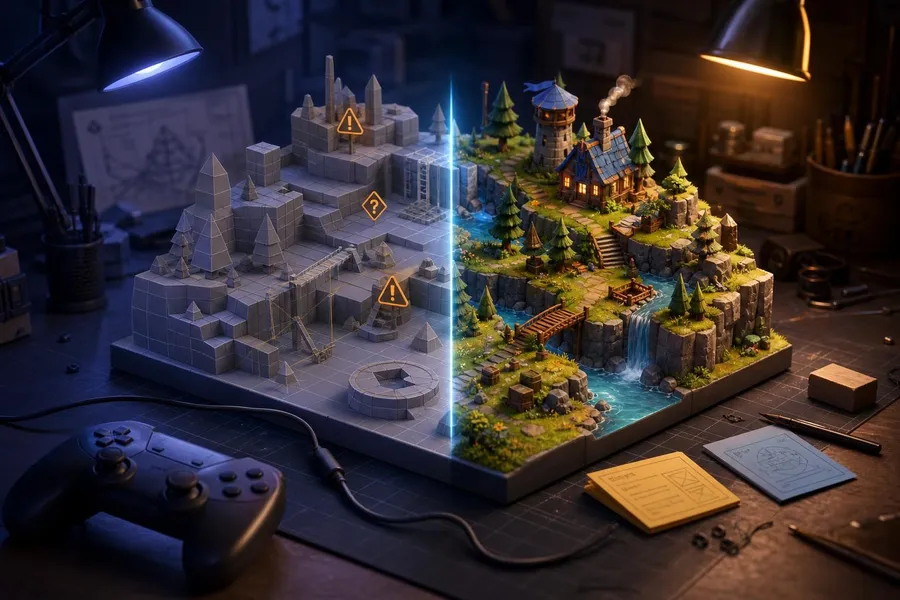
What are early access games? Early access games are playable, unfinished games sold or offered before their official full release so players can try them while development continues. Before you buy an early access game, you should assume the current build is the product you are paying for, not the promised future version. You may get frequent patches, direct developer communication, a lower launch price, and a chance to influence the design, but you may also face bugs, missing modes, performance problems, save resets, server wipes, or a game that never becomes what the store page once suggested. This guide explains what early access usually includes, where the biggest risks appear, and how to decide whether a game is worth your USD before clicking buy.
Quick summary
Early access is not a finished release. It usually means the game is playable but still in active development.
Buy for what exists now. Future features, modes, story chapters, console ports, or multiplayer systems can change, slip, or disappear.
Refund rules vary by store. On major PC storefronts, playtime and purchase date often matter, and early access playtime may count toward refund limits.
Patches are part of the deal. Updates can improve the game, break mods, rebalance progression, or make old saves incompatible.
The safest purchase is an informed one. Read recent reviews, update history, developer posts, system requirements, and refund terms before spending money.
How early access works in practice
Early access is a release model, not a quality label. A game can be in early access and still feel polished, or it can be unstable and thin on content. The common idea is that the developer sells access to a playable build while using player feedback, sales revenue, and bug reports to keep building the game.
On PC, Steam is the most familiar home for early access games, but similar models appear elsewhere under names such as Xbox Game Preview, beta access, alpha access, founder packs, preview builds, or pre-release editions. These labels are not identical, so the store page matters more than the marketing phrase.
A responsible early access page should explain the current state of the game, how much content is already playable, how the full version is expected to differ, and whether the price may change. Still, those statements are plans, not guarantees. Development depends on money, staffing, technical hurdles, community response, licensing, and platform approval.
Early access versus demo, beta, and pre-order
A demo is usually a limited sample. A beta test often focuses on testing features before launch, and it may be free or temporary. A pre-order is a purchase before release, sometimes with bonus items or advance access. Early access is different because you normally get a playable, ongoing version of the game that may remain available for months or years before version 1.0.
What you usually get when buying an early access game
The value of early access depends on the current build. Some games already include the main gameplay loop, online play, crafting, progression, difficulty settings, and multiple biomes or maps. Others may offer only the foundation: one mode, placeholder art, limited quests, missing endgame systems, or basic controller support.
You are typically paying for access, not for a finished promise. That access may include updates through full release, but exact rules can differ by platform and publisher. Some games increase in price as content expands. Others stay at one price, sell optional DLC later, or reset progression when major systems change.
What you may see | What it means for buyers | Risk level |
|---|---|---|
Core gameplay loop is already playable | You can judge whether the main idea is fun today | Lower |
Roadmap lists many future features | The final game may change, and planned features are not guaranteed | Medium to high |
Frequent patches and developer posts | Development appears active, but updates may still introduce new bugs | Medium |
Long gaps between updates | The project may be underfunded, delayed, or lower priority | High |
The biggest risks before you spend money
The largest risk is expectation mismatch. Many early access disappointments happen because buyers imagine the finished game, while the purchase only gives them the current build. If the game is missing key features that matter to you, such as co-op, controller support, cloud saves, ultrawide display support, a campaign ending, or dedicated servers, wait until those features actually ship.
Technical risk is also common. Early access games can crash, lose progress, run poorly on certain hardware, or require large patches. Multiplayer titles add more uncertainty because servers, matchmaking, anti-cheat, and balance systems may be unfinished. A survival game, extraction shooter, or online RPG can feel very different after one major economy or combat update.
Common early access problems
Missing content, including late-game areas, story endings, classes, maps, or difficulty modes.
Unstable performance, especially after patches, engine upgrades, or new multiplayer features.
Save file resets, character wipes, progression changes, or incompatible older saves.
Roadmap changes when developers cut features, delay updates, or redesign core systems.
Community frustration when communication slows or promised milestones repeatedly move.
How patches can help or hurt the experience
Frequent patches are one of the attractions of early access. A good update cadence can make a game feel alive, and players may see their feedback turn into balance changes, accessibility options, quality-of-life improvements, or new content. For people who enjoy following development, this can be part of the fun.
The tradeoff is volatility. A patch can change weapon stats, crafting costs, enemy behavior, user interface layouts, save formats, or mod compatibility. If you prefer a stable experience, a game that changes every week may be frustrating. If you plan to play with friends, everyone may need to update at the same time, and a broken patch can disrupt a weekend session.
Patch notes are one of the best signals of developer discipline. Look for clear explanations, known issues, rollback plans, and responses to major bugs. Vague update posts, repeated emergency hotfixes, or months of silence are warning signs, especially for games that depend on online services.
How to evaluate an early access game before buying
The best rule is simple: would you be satisfied if development stopped tomorrow? If the answer is no, consider wishlisting the game instead of buying now. This does not mean every early access purchase is bad. It means the current version should already be worth the price to you.
A practical pre-purchase checklist
Read the store description for the current build, not just the feature roadmap.
Sort user reviews by recent date to see whether the latest patches improved or harmed the game.
Check update history for consistency over the past several months.
Watch recent gameplay, not only trailers, because trailers may show ideal conditions.
Confirm refund rules on the exact store where you plan to buy.
Compare the price with how many hours of current content you realistically expect to play.
For a $10 to $20 indie build, you might be comfortable supporting experimentation. For a $40 to $70 premium-priced early access title, the current state deserves closer scrutiny. Higher price does not automatically mean higher risk, but it raises the standard for polish, content, communication, and support.
Refunds, store policies, and consumer protection basics
Refund rules are not universal. Steam and the Epic Games Store both publish refund policies that use purchase windows and playtime limits, and both address pre-release or early access situations in their own language. Xbox Game Preview also warns players that preview games are unfinished and that progress may not carry over to the final release.
In the United States, digital game purchases are mostly governed by the platform's store terms, the publisher's terms, and general consumer protection rules against deceptive practices. The Federal Trade Commission encourages consumers to review marketplace policies, keep records, and report dishonest business practices. That does not mean every disappointing early access game is illegal or refundable. It does mean you should preserve receipts, screenshots of store claims, and support messages if you believe a listing was misleading.
Before you play | Why it matters |
|---|---|
Read the refund window | Some stores limit refunds by days since purchase and time played. |
Check whether early access playtime counts | Trying the game for too long may remove your easy refund option. |
Save the store page or key claims | Documentation helps if a description changes after purchase. |
Test quickly on your hardware | Performance, controller support, and crashes should be checked before refund limits pass. |
When buying early access makes sense
Early access can be a good purchase when the game already delivers the experience you want. If the combat, building, racing, management, or exploration loop is fun now, future updates become a bonus rather than the reason for buying. It also makes sense when you enjoy giving feedback, testing new systems, reading patch notes, and watching a project evolve over time.
It is less suitable if you want a polished story campaign, a stable competitive environment, bug-free co-op, finished achievements, or a predictable save file that will survive every update. In those cases, waiting for version 1.0, a major sale, or a console certification milestone is often smarter.
Good signs from a developer
The store page clearly separates current features from planned features.
Recent patch notes show fixes, not only promotional posts.
Known issues are acknowledged openly.
The price feels fair for the current build.
Community feedback receives specific, professional responses.
Questions to ask yourself before checkout
Before you buy, decide what you are actually purchasing. Are you buying a complete weekend experience, a long-term hobby, or a bet on potential? Each answer implies a different risk tolerance. A player who loves sandbox experimentation may accept jank and resets. A player who wants a finished RPG story may regret paying early.
Also think about timing. If the game is about to receive a major update, waiting a week can reveal whether the patch is stable. If a seasonal sale is near, adding the game to your wishlist may save money. If your friends are buying today for a co-op run, make sure everyone understands that the experience may change quickly.
The safest early access mindset is: pay only for the build you can play today, and treat the roadmap as a possibility, not a promise.
Frequently asked questions
Are early access games complete?
No. Early access games are playable but unfinished. They may lack content, polish, performance optimization, story endings, or final balance.
Can an early access game stay unfinished forever?
Yes. Some games reach version 1.0 quickly, some take years, and some never deliver every planned feature. Buy based on the current build.
Do early access games cost less?
Sometimes. Many launch at a lower USD price and increase later, but some are priced close to full releases. Price strategy is set by the developer or publisher.
Will my save carry over to the final release?
Not always. Major system changes can require save resets or progression wipes, especially in online, survival, or role-playing games.
Is early access the same as a beta?
Not exactly. A beta is usually a test phase, often temporary. Early access is typically an ongoing playable release sold before the game is complete.
Can I refund an early access game?
Possibly, depending on the store, your playtime, purchase date, and local terms. Check the refund policy before playing for more than a short test session.
Are early access reviews reliable?
They can be useful if you filter for recent reviews. Older reviews may describe an outdated build, while recent reviews reflect current patches and developer activity.
Should I buy early access on console?
Only if the store page clearly explains the preview status and you accept that features, performance, and progress may change before the final release.
Conclusion: early access is opportunity plus uncertainty
Early access games can be exciting because they let you play early, support interesting projects, and watch development unfold. They can also be disappointing when store pages overemphasize future ambitions and understate present limitations. The key is to judge the game as it exists now.
Before spending money, review the current content, recent patches, developer communication, hardware performance, and refund policy. If the available build already looks worth the asking price, early access may be a good fit. If you are mainly buying because of future promises, waiting is usually the better consumer decision.
Sources
Steam Support: Early Access
Steam: Steam Refunds
Epic Games: Epic Games Store Refund Policy
Federal Trade Commission: Buying From an Online Marketplace