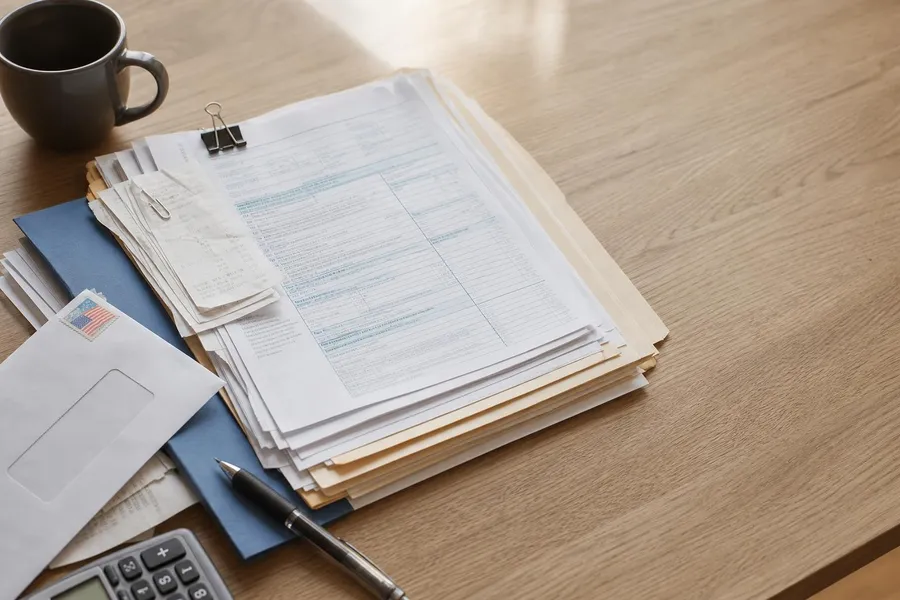
Keeping the right tax records after you file helps you prove income, deductions, credits, payments, and basis if the IRS questions a return later. For most individual federal income tax returns, the practical minimum is three years, but some records should be saved longer, especially if they involve underreported income, a bad debt deduction, worthless securities, a home sale, investments, rental property, self-employment, or unfiled returns. This guide explains which documents to keep, how long to save them, what to store digitally, and when it is safe to shred old paperwork. It is written for U.S. taxpayers who want a clear, organized recordkeeping system without saving every receipt forever.
What are tax records? Tax records are the documents that support the numbers on your federal and state tax returns, including income forms, receipts, statements, mileage logs, payment confirmations, prior returns, and records that establish the cost or tax basis of property.
Most taxpayers should keep filed returns and supporting documents for at least three years.
Keep records for six years if you omitted more than 25% of your gross income or certain foreign financial income.
Keep records for seven years when you claim a loss from worthless securities or a bad debt deduction.
Keep property and investment basis records until at least three years after you sell or otherwise dispose of the asset.
Keep copies of filed returns indefinitely if possible, because they can help with loans, financial aid, immigration matters, and future tax questions.
How long should you keep tax records after filing?
The IRS recordkeeping rule is built around the period of limitations. This is the window when you can amend a return to claim a credit or refund, or the IRS can assess additional tax. For many individual returns, that window is three years from the date the return was filed. If you filed before the due date, the return is generally treated as filed on the due date for limitation purposes.
A good household rule is to keep the complete return, W-2s, 1099s, deductible expense records, payment proofs, and IRS or state notices together by tax year. If you filed a 2025 return in April 2026, for example, you would normally keep the supporting records until at least April 2029. If your situation includes business income, investment sales, home improvements, foreign accounts, or amended returns, keep the relevant records longer.
Record or situation | Suggested retention period | Why it matters |
|---|---|---|
Filed federal return and routine support | At least 3 years | Covers the standard IRS review and amendment window for many returns. |
Claim for refund after filing | 3 years from filing or 2 years from tax payment, whichever is later | Supports amended returns and refund claims. |
Omitted income over 25% of gross income | At least 6 years | The IRS has a longer assessment period in this situation. |
Bad debt deduction or worthless securities loss | At least 7 years | These claims have a longer recommended record period. |
No return filed or fraudulent return | Indefinitely | There is no normal limitation period for assessment in these cases. |
Tax documents worth saving every year
Your annual tax file should tell a complete story: what you earned, what you deducted, which credits you claimed, and what you paid. You do not need to keep every personal receipt, but you should keep any document that supports a number on the return. If the IRS or a state tax agency sends a notice, organized records make it much easier to respond accurately.
Core records for most taxpayers
A complete copy of your filed Form 1040, schedules, and state return.
Forms W-2, 1099-NEC, 1099-K, 1099-INT, 1099-DIV, 1099-R, SSA-1099, and similar income forms.
Mortgage interest statements, property tax records, charitable contribution acknowledgments, and eligible medical expense records if used.
Estimated tax confirmations, extension payments, refund records, and IRS Direct Pay or Electronic Federal Tax Payment System confirmations.
IRS and state tax notices, plus copies of any written responses you sent.
If you use tax software, save both the final PDF and the data file if the software allows it. The PDF is useful for reading and sharing, while the data file can make next year's return easier to prepare.
Records to keep longer than three years
Some records should stay in your files well beyond the standard three-year window because they affect a future tax event. These documents may not matter this year, but they can become important when you sell property, withdraw retirement funds, inherit assets, or prove your work history.
Home purchase, sale, and improvement records
Keep home records for as long as you own the property and at least three years after the tax year in which you sell it. Save closing disclosures, settlement statements, legal fees, title insurance records, major improvement invoices, permits, and receipts for work that adds value, prolongs the home's useful life, or adapts it to a new use. Examples can include an addition, new roof, major HVAC replacement, kitchen renovation, or energy-related upgrade.
These records help establish basis, which can reduce taxable gain when you sell. Routine repairs, such as fixing a leak or repainting a room, generally do not increase basis unless they are part of a larger qualifying improvement.
Investment and retirement account records
Keep brokerage purchase confirmations, reinvested dividend records, stock split information, cryptocurrency transaction histories, and inherited asset valuations until at least three years after you sell the asset. Even when a broker reports cost basis, your own records can help correct errors or prove information that was not reported to the broker.
For retirement accounts, keep records of nondeductible traditional IRA contributions, Roth IRA contributions, rollovers, conversions, and Forms 5498 and 1099-R. These documents may prevent double taxation later, especially when accounts have a mix of pre-tax and after-tax money.
Special rules for self-employed taxpayers and side gigs
If you freelance, drive for an app, sell online, rent property, or operate a small business, recordkeeping becomes more important. The IRS expects business income and expenses to be supported by books and records, not just estimates. You should keep receipts, invoices, bank statements, payment processor reports, mileage logs, home office calculations, inventory records, and asset purchase documents.
Practical business record categories
Income records: invoices, Form 1099-NEC, Form 1099-K, platform statements, deposit records, and sales reports.
Expense records: receipts, canceled checks, credit card statements, subscriptions, supplies, advertising, and professional fees.
Vehicle records: mileage logs showing date, destination, business purpose, and miles driven, plus actual expense records if used.
Asset records: purchase date, cost, depreciation, improvements, and sale or disposal details.
Tax payment records: quarterly estimated payments, payroll tax records if applicable, and state tax filings.
For employment tax records, such as payroll documents, the IRS generally advises keeping records for at least four years after the tax becomes due or is paid, whichever is later. Household employers and small businesses should pay particular attention to this longer period.
Can you keep digital copies instead of paper?
Digital tax records are acceptable when they are complete, accurate, readable, and accessible. A scanned receipt is useful only if it clearly shows the vendor, date, amount, and business or tax purpose. For emailed receipts and online statements, download a PDF rather than relying on a merchant account that may not keep records for many years.
A simple digital filing system
Create one folder for each tax year, such as 2026 Federal and State Tax Records.
Use subfolders for income, deductions, credits, payments, investments, property, and notices.
Name files consistently, for example 2026-W2-EmployerName or 2026-Charity-Receipt.
Back up the folder in at least two secure places, such as an encrypted cloud account and an external drive.
Protect files with strong passwords and multi-factor authentication.
Paper originals may still be worth keeping for deeds, closing documents, signed legal agreements, adoption records, certain retirement paperwork, and documents that would be difficult or expensive to replace. Store irreplaceable records in a fire-resistant safe or safe deposit box.
What to do if you lost old tax records
If you cannot find a prior return or income form, start with your IRS Online Account. The IRS provides several transcript types, including tax return transcripts, tax account transcripts, record of account transcripts, wage and income transcripts, and verification of non-filing letters. A transcript is not a photocopy of the return, but it often contains enough information for loans, filing back taxes, or checking reported income.
You can also request transcripts by mail or by phone if you cannot access the online system. For an actual copy of a previously filed return, the IRS uses Form 4506, and a fee may apply. State tax agencies have their own procedures for state return copies and wage records, so check the agency for the state where you filed.
When and how to dispose of old tax records
Once the retention period has passed and you no longer need the documents for loans, property basis, benefits, or legal matters, dispose of them securely. Tax files contain Social Security numbers, bank information, employer details, dependents' information, and sometimes medical or education records. Throwing them in the trash creates an avoidable identity theft risk.
Safe disposal checklist
Shred paper records with personal or financial information.
Delete digital files securely, including copies in downloads, email attachments, and old backups.
Wipe or destroy old hard drives, USB drives, phones, or laptops before recycling them.
Keep a short index of destroyed records by tax year if you want an audit trail for your own organization.
Common mistakes to avoid
The most common recordkeeping mistake is keeping the return but not the proof behind it. A tax return shows what you reported, but receipts, forms, statements, and logs prove why those numbers are correct. The second mistake is saving everything in one unorganized folder, which makes it hard to respond quickly if a notice arrives.
Do not rely only on banks or employers to keep copies for you indefinitely.
Do not discard home improvement records before selling the property.
Do not keep business and personal expenses mixed without notes explaining the tax purpose.
Do not assume a credit card statement always proves a deductible expense, because it may not show what was purchased.
Do not ignore state tax rules, which may differ from federal record periods.
Frequently asked questions
How long should I keep my federal tax returns?
Keep the filed return and supporting records for at least three years in most cases. Many taxpayers keep the actual return indefinitely because it can help with future tax, loan, and financial questions.
Should I keep W-2s and 1099s after I file?
Yes. Keep W-2s, 1099s, and other income forms with the tax return they support. They help prove income and withholding if the IRS, a state agency, lender, or benefit program asks later.
Is a scanned receipt enough for taxes?
Usually, a digital copy is useful if it is clear, complete, accurate, and accessible. It should show the date, vendor, amount, and what was purchased or paid.
How long should I keep home improvement receipts?
Keep them for as long as you own the home and at least three years after the year you sell it. Qualifying improvements can affect your basis and may reduce taxable gain.
Can I throw away pay stubs after receiving my W-2?
If the W-2 is correct and you do not need the pay stubs for another purpose, you can usually discard them securely. Keep the W-2 with your tax records.
What if I never filed a return for a year?
If no valid return was filed, the normal limitation period does not start. Keep any records for that year indefinitely and consider speaking with a qualified tax professional.
How do I get old tax records from the IRS?
Use your IRS Online Account or the IRS transcript request process to get transcripts. If you need an actual copy of a filed return, you generally request it using Form 4506.
Do state tax agencies follow the same recordkeeping rules?
Not always. Federal rules are a baseline, but states may have different assessment and refund periods. Keep state returns and supporting records with the same care as federal records.
Conclusion
Good tax recordkeeping is not about saving every piece of paper forever. It is about keeping the documents that prove what you reported, for as long as the IRS, a state agency, or a future transaction might require them. For most taxpayers, three years is the minimum for routine returns, while six or seven years applies in certain higher-risk situations. Property, investment, retirement, and business records often need a longer timeline because they affect future tax calculations.
The best system is simple: organize records by tax year, save the filed return and all support, keep long-term basis records separately, back up digital files, and shred sensitive documents when they are no longer needed. With that approach, you can respond to tax notices, amend returns, apply for loans, and calculate future gains with far less stress.
Sources
Internal Revenue Service: How long should I keep records?
Internal Revenue Service: Topic no. 305, Recordkeeping
Internal Revenue Service: Get your tax records and transcripts
Internal Revenue Service: Publication 530, Tax Information for Homeowners
Federal Trade Commission: Protecting your personal information: Which documents to keep and which to shred