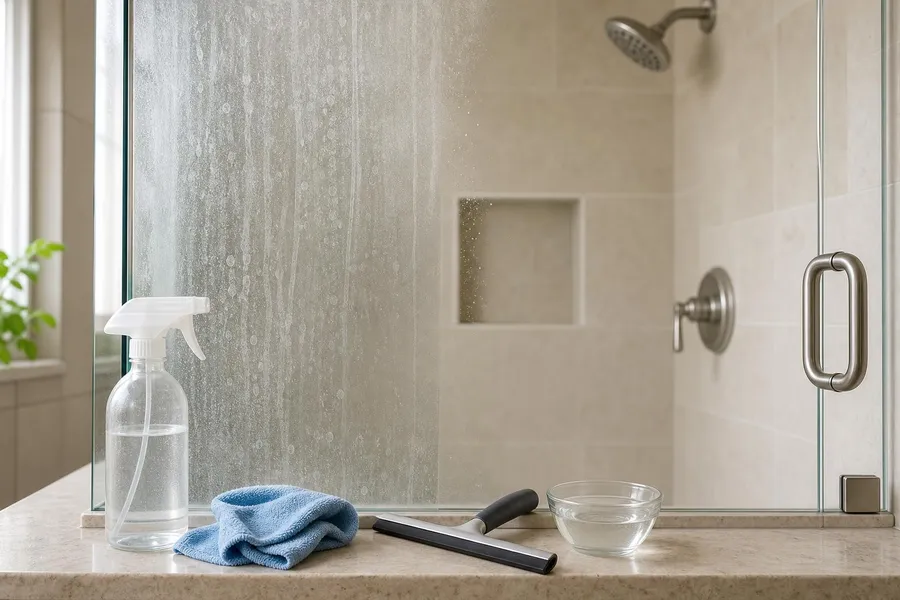
Hard water stains on shower doors and fixtures are mineral deposits left behind when water dries, and the safest way to remove them is to dissolve the buildup with the right acidic cleaner, use non-scratch tools, rinse thoroughly, and dry the surface afterward. In this guide, you will learn which cleaners work on glass, chrome, brushed nickel, tile, and showerheads, which tools can damage finishes, and how to keep shower glass clearer for longer with a simple maintenance routine. The goal is not just to make the shower look cleaner today, but to slow the cycle of cloudy glass, chalky faucets, crusty showerheads, and repeated scrubbing.
Hard water stains are usually calcium and magnesium deposits, often mixed with soap scum.
Mild acids such as white vinegar, citric acid, and bathroom descalers are the most useful cleaners for mineral buildup.
Avoid abrasive pads, metal scrapers on coated glass, and mixing bleach with other cleaners.
Daily drying with a squeegee or microfiber cloth is the most reliable prevention habit.
What are hard water stains?
What are hard water stains? Hard water stains are visible mineral residues that remain after hard water evaporates from shower glass, metal fixtures, tile, and grout. In many U.S. homes, hard water contains dissolved calcium and magnesium. When droplets dry on a shower door or faucet, those minerals can leave a cloudy white film, rough scale, or chalky rings.
Hard water stains are different from ordinary dirt. A regular all-purpose cleaner may remove body oils or light grime, but it often leaves mineral scale untouched. That is why a shower can look dull even after it has been cleaned. The deposit needs to be softened or dissolved, usually with an acid-based cleaner, before it can be wiped away.
Soap scum makes the problem worse. Bar soap can react with minerals in water, creating a sticky film that clings to glass and fixtures. In a real bathroom, the haze on a shower door is often a mix of minerals, soap residue, shampoo, conditioner, and skin oils. Treating both the mineral scale and the greasy film gives better results than scrubbing harder.
Best cleaners for hard water stains on shower doors and fixtures
The best cleaner depends on the surface and the severity of the buildup. For light weekly cleaning, a simple white vinegar solution may be enough. For stubborn scale, a commercial bathroom cleaner labeled for limescale, calcium, or hard water stains can work faster. Always read the label, test a hidden spot, and follow the contact time rather than leaving a product on indefinitely.
Cleaner type | Best use | Use with care on |
|---|---|---|
White vinegar | Light mineral film on glass, faucets, and showerheads | Natural stone, unsealed grout, damaged finishes |
Citric acid solution | Cloudy glass and removable fixtures with moderate scale | Stone surfaces and manufacturer-coated glass |
Commercial limescale remover | Heavy calcium deposits and neglected fixtures | Polished metal, stone, colored grout, and delicate coatings |
Mild dish soap plus water | Soap scum and oily residue before or after descaling | Surfaces that should not stay wet for long periods |
Why acid-based cleaners work
Mineral deposits are alkaline in nature, so mild acids help break them down. This is why vinegar, citric acid, and many bathroom descalers are commonly used for hard water stains. The key is dwell time. Spraying and wiping immediately may not do much. Letting the cleaner sit for a few minutes, while keeping the surface wet, usually works better.
How to remove hard water stains from shower glass
For clear glass shower doors, start with the gentlest method. Mix equal parts white vinegar and warm water in a spray bottle, or use a ready-to-use bathroom cleaner labeled for hard water deposits. Spray the glass evenly and let it sit for 5 to 10 minutes. Do not let the cleaner dry on the glass, because dried cleaner can leave another film.
Wet the shower door with warm water to loosen surface residue.
Apply the cleaner and allow the recommended contact time.
Scrub gently with a non-scratch sponge or microfiber cloth.
Rinse thoroughly from top to bottom.
Dry immediately with a squeegee, then buff with a clean microfiber towel.
If the glass still looks cloudy, repeat the process rather than switching immediately to a harsh abrasive. Some stains are layered, so one pass may remove soap scum while the next removes mineral scale. If your shower door has a factory-applied protective coating, check the manufacturer’s care instructions before using vinegar, powdered cleansers, razor blades, or strong acidic products.
How to clean hard water buildup on faucets, showerheads, and fixtures
Fixtures need a more cautious approach than plain glass because finishes vary. Chrome is generally durable, but brushed nickel, oil-rubbed bronze, matte black, brass, and specialty finishes may be more sensitive to acids and abrasion. Before using a descaler, check the fixture brand’s care guidance if available.
For faucets and handles
Soak a paper towel or microfiber cloth in diluted vinegar, wrap it around the affected area, and leave it in place for a short period. Five to 10 minutes is a safer starting point than a long soak. Remove the wrap, gently scrub with a soft toothbrush, rinse well, and dry. If the finish looks dull, stop and switch to a milder method.
For showerheads
If the showerhead sprays unevenly, mineral scale may be blocking the nozzles. For a fixed showerhead, fill a plastic bag with diluted vinegar, secure it around the showerhead with a rubber band, and soak only as long as needed. For a removable showerhead, detach it if the manufacturer allows, soak briefly, rinse, and run water through it before reinstalling. Avoid this method on finishes that the manufacturer says should not be exposed to vinegar.
Tools that work without scratching
The right tool matters as much as the cleaner. Hard water stains tempt people to scrape, but aggressive tools can permanently scratch glass or remove fixture finishes. Start soft, then increase only if the surface can tolerate it.
Microfiber cloths: best for wiping, drying, and buffing without lint.
Non-scratch sponges: useful for shower doors and tile when paired with a descaler.
Soft toothbrushes: good for faucet bases, seams, and showerhead nozzles.
Plastic scrapers: safer than metal for some flat glass surfaces, but still require caution.
Squeegees: essential for prevention after each shower.
Avoid steel wool, scouring pads, pumice stones on glass, and abrasive powders unless the product label specifically says the surface is safe. A razor blade may remove mineral crust from plain glass, but it can damage coated glass, scratch if used at the wrong angle, or nick seals and frames. For most households, repeated gentle cleaning is safer than one aggressive session.
Safety rules: what not to mix or use
Bathroom cleaning is safer when products are used one at a time. Do not mix bleach with vinegar, ammonia, toilet bowl cleaner, limescale remover, or any other cleaner. The Centers for Disease Control and Prevention warns against mixing bleach with other cleaners because dangerous gases can form. This matters in showers because people often try one product, then another, in a small space with limited ventilation.
Open a window or run the bathroom fan while cleaning.
Wear cleaning gloves, especially with acidic descalers.
Rinse one product away completely before using another.
Keep cleaners away from children and pets.
Follow the label for contact time, dilution, and compatible surfaces.
For households that want lower-concern cleaning products, the U.S. Environmental Protection Agency’s Safer Choice program is a helpful label to look for. It does not mean a product can be used carelessly, but it indicates that the product’s ingredients have been reviewed against the program’s human health and environmental criteria.
How to keep shower glass clearer longer
Prevention is easier than removal because hard water stains form when droplets dry in place. A 30-second routine after each shower can reduce buildup dramatically. Use a squeegee on the glass, wipe the lower edge where water pools, and leave the shower door or curtain open enough for air movement.
Weekly maintenance routine
Spray glass and fixtures with a mild bathroom cleaner or diluted vinegar if the surface allows it.
Let it sit briefly, then wipe with a non-scratch sponge.
Rinse well so cleaner residue does not attract new grime.
Dry glass, faucet handles, and the showerhead face with microfiber.
If your home has very hard water, prevention may also include a water softener or other treatment system. That is a bigger decision involving plumbing, maintenance, salt use, local water conditions, and cost. For many renters and homeowners, however, consistent drying and weekly light descaling are enough to keep the shower from looking neglected.
Common mistakes that make hard water stains worse
The biggest mistake is treating mineral scale like ordinary dirt. Scrubbing harder with the wrong pad can scratch the surface while leaving the deposit behind. Another mistake is letting acidic cleaners sit too long on metal finishes, which can dull or discolor them. More time is not always better.
Using bleach for mineral deposits: bleach disinfects when used correctly, but it is not the right tool for dissolving limescale.
Skipping the rinse: leftover cleaner can create streaks and attract residue.
Cleaning only when buildup is heavy: light weekly cleaning takes less effort than monthly rescue cleaning.
Ignoring ventilation: slow drying gives minerals more time to settle visibly.
Using one method on every surface: glass, stone, grout, chrome, and specialty finishes need different care.
FAQ
Does vinegar remove hard water stains from shower doors?
Yes, vinegar can help dissolve light to moderate mineral deposits on plain glass. Let it sit briefly, scrub with a non-scratch sponge, rinse, and dry. Avoid vinegar on natural stone and surfaces whose manufacturer warns against acidic cleaners.
What is the best cleaner for heavy hard water buildup?
For heavy buildup, use a commercial bathroom descaler labeled for calcium, lime, or hard water stains. Choose one compatible with your surface, follow the label, and test a small area first.
Can I use bleach on hard water stains?
Bleach is not the best choice for mineral deposits. It may lighten some stains or disinfect when used properly, but it does not dissolve calcium scale the way acid-based cleaners do. Never mix bleach with vinegar or other cleaners.
How do I remove hard water stains from a showerhead?
Soak the affected nozzles briefly with diluted vinegar if the finish allows it, then scrub gently with a soft toothbrush, rinse, and run water through the showerhead. Check manufacturer guidance for specialty finishes.
Will a squeegee really prevent hard water stains?
A squeegee helps because it removes droplets before they dry and leave minerals behind. It will not change your water hardness, but it can greatly reduce visible spots on shower glass.
Are hard water stains permanent?
Most fresh hard water stains are removable. Older deposits can etch, dull, or bond strongly to surfaces, especially if abrasive cleaning has scratched the glass. Repeated gentle descaling is usually safer than harsh scrubbing.
Can I use vinegar on marble or natural stone in the shower?
No. Vinegar and many descalers can damage marble, limestone, travertine, and other calcium-based stones. Use a stone-safe cleaner and consult the stone or sealer manufacturer for mineral buildup problems.
How often should I clean shower glass if I have hard water?
Dry the glass after each shower if possible, and do a light cleaning about once a week. Homes with very hard water may need more frequent maintenance.
Conclusion
Removing hard water stains on shower doors and fixtures is mostly about matching the cleaner to the deposit and the surface. Mineral scale responds best to mild acids, while soap scum often needs a cleaner that can cut through oily residue. Use non-scratch tools, give cleaners enough contact time, rinse thoroughly, and dry the shower afterward.
For long-term results, prevention matters more than occasional deep cleaning. A squeegee, microfiber towel, good ventilation, and weekly maintenance can keep glass clearer and fixtures brighter. When in doubt, choose the gentlest effective method and protect finishes from harsh chemicals, long soaks, and abrasive tools.
Sources
U.S. Geological Survey: Hardness of Water
Centers for Disease Control and Prevention: Cleaning and Disinfecting with Bleach
U.S. Environmental Protection Agency: Safer Choice
American Cleaning Institute: Dealing With Hard Water Stains
University of Georgia Cooperative Extension: Home Maintenance: Protect Your Investment