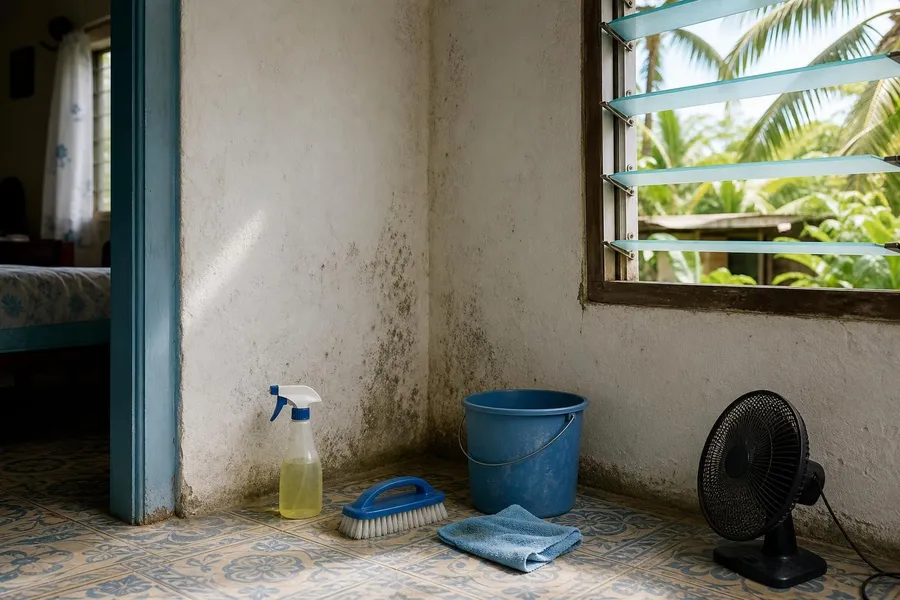
What is mould? Mould is a living fungus that grows on damp surfaces and releases tiny spores into the air. If mould keeps coming back on your walls, the real problem is usually not the stain you can see, but moisture that remains hidden in plaster, blockwork, timber, paint, closets or the air. In Belize, where coastal humidity, rainy season showers and hurricane-related leaks can keep homes damp for long periods, wall mould can return quickly after cleaning. This guide explains why it comes back, how to find the moisture source, what fixes actually last, when cleaning is enough, and when you need a plumber, roofer, AC technician or building professional.
Mould returns when walls stay damp, humidity remains high, or leaks are cleaned over instead of repaired.
In Belize, the rainy season, warm air, salt-laden coastal breeze and poorly ventilated rooms can all make wall mould worse.
The lasting fix is to stop water entry, reduce indoor humidity, improve airflow and remove contaminated porous materials when needed.
Small patches on hard surfaces can often be cleaned safely, but large, recurring or flood-related mould needs professional assessment.
Why mould returns on walls in Belize homes
Mould needs three things: moisture, a food source and time. Wall paint, dust, cardboard, paper-faced gypsum board, timber trim, curtains and furniture can all provide material for mould to feed on. But moisture is the trigger you can control most effectively.
Belize’s climate makes moisture control more challenging than in a dry country. The National Meteorological Service of Belize describes a clear rainy season, with most rainfall from June to November, and rainfall varying widely from north to south. In practical home terms, that means exterior walls, roof junctions, jalousie windows, doors, bathrooms and ground-floor rooms can be exposed to frequent wetting, then slow drying.
The surface stain is only the symptom
A common mistake is to wipe mould, repaint the wall and assume the job is finished. If the wall is still damp behind the paint, the mould can return within days or weeks. Paint may cover staining, but it does not repair a roof leak, stop condensation behind a wardrobe, clear a blocked AC drain or dry water trapped in porous building materials.
Common causes and lasting fixes
Where mould appears | Likely moisture source | What to check | Fix that lasts |
|---|---|---|---|
Top corners and ceiling edges | Roof leak or trapped warm air | Roof screws, flashing, gutters, attic ventilation | Repair leak, dry cavity, improve roof space airflow |
Behind beds, wardrobes or curtains | Poor airflow and condensation | Furniture touching exterior walls, damp fabric, musty smell | Create space from wall, ventilate, use dehumidification if needed |
Bathroom walls | Steam, leaking pipes or failed grout | Extractor fan, window use, pipe joints, shower corners | Improve exhaust, reseal wet areas, repair plumbing |
Lower walls near floor | Rising damp, flooding or splashback | Drainage, yard slope, cracked render, past flood line | Improve drainage, waterproof exterior, replace damaged porous materials |
Near AC units | Condensate leak or oversized cooling | Drain line, drip tray, cold wall patches, dirty filters | Service AC, clear drain, control humidity not just temperature |
How to find the hidden moisture source
Before buying more cleaner or paint, investigate like you would investigate a leak in a boat. Start at the mould spot, then work outward and upward. Water can travel along beams, pipes and block walls before showing itself, so the visible patch is not always where the leak begins.
Look for patterns after rain. If the patch darkens after showers, inspect roof sheets, flashing, gutters, windows and exterior cracks.
Check plumbing pressure points. Bathrooms, kitchens, laundry areas and walls behind water lines are common sources of slow leaks.
Move furniture away from exterior walls. Leave a hand-width of space so air can circulate, especially in bedrooms and closets.
Use your nose. A musty smell can indicate damp material behind paint, inside a wardrobe or under flooring before mould becomes obvious.
Measure humidity. A simple hygrometer can show whether rooms are staying too humid even when there is no visible leak.
Signs the wall is still wet inside
Peeling paint, bubbling plaster, a powdery white deposit, soft drywall, swollen skirting, recurring ants or termites, and a wall that feels cooler than surrounding areas can all point to trapped moisture. If the patch is near electrical outlets, do not open anything while wet. Turn off power to the affected circuit and get qualified help.
How to clean small mould patches safely
Small areas of mould on hard, non-porous surfaces can often be cleaned by householders if the person doing the work is healthy, the area is limited, and the moisture source has been corrected. Wear gloves, eye protection and a well-fitting mask, ventilate the room, keep children away, and avoid dry brushing because it can spread spores.
Scrub hard surfaces with detergent and water, then dry the area thoroughly.
Discard mouldy porous items that cannot be fully cleaned, such as soaked cardboard, badly affected fabric or damaged ceiling tiles.
Dry the wall with airflow and dehumidification where practical before repainting.
Use mould-resistant primer and paint only after the wall is clean, dry and sound.
What not to do
Do not mix bleach with ammonia, vinegar or other cleaners. Do not paint over active mould. Do not run a fan across heavy mould before cleaning, because that can spread contamination. Do not rely on perfume sprays, charcoal bags or air fresheners as a fix. They may reduce smell for a short time, but they do not remove the damp source.
Ventilation, AC and dehumidifiers: what actually helps
In Belize, ventilation must be managed carefully. Opening windows can help after a shower or while cooking, but on very humid days it may also bring moist air indoors. The best approach is controlled airflow: exhaust steam and cooking moisture outside, keep interior air moving, and use air conditioning or a dehumidifier to remove water from the air when natural ventilation is not enough.
Air conditioning can reduce humidity, but only if it is sized, maintained and drained properly. A unit that cools the room too quickly without running long enough may leave the air clammy. A dirty filter or blocked condensate line can make the mould problem worse. If mould appears around the AC, on the wall below it or near the supply airflow, service the unit before repainting.
Everyday habits that reduce wall mould
Run bathroom ventilation during and after showers, or open windows briefly when outdoor conditions allow.
Avoid drying wet towels and clothes in closed bedrooms or closets.
Keep beds, sofas and wardrobes slightly away from exterior walls.
Clean AC filters and confirm that drain lines discharge properly outside.
After heavy rain, check corners, closets and window frames before mould has time to spread.
When cleaning is not enough
Cleaning is not enough when mould covers a large area, keeps returning in the same place, follows a flood, affects soft materials, or appears with structural damage. In those situations, the wall may need opening, drying, removal of contaminated material and repair of the source. This is especially important after storm surge, river flooding or roof damage, because trapped water can remain in wall cavities long after the surface looks normal.
People with asthma, chronic lung disease, allergies, weakened immune systems, infants and older adults should avoid doing mould cleanup themselves. The World Health Organization links damp and mouldy indoor environments with increased respiratory symptoms and asthma problems, so repeated mould should be treated as a health and building issue, not just a housekeeping matter.
Who to call in Belize
Call the trade that matches the suspected source. A roofer can inspect zinc sheets, screws, valleys and flashing. A plumber can pressure-test water lines and check bathroom leaks. An AC technician can clear condensate drains and assess humidity performance. A contractor or building inspector can advise if damaged drywall, timber or plaster needs removal. For rented homes, document the issue with dated photos, messages and repair requests, and ask for written responses and quotes in BZD where costs are discussed.
Best materials and repairs for a humid climate
A lasting mould repair should match Belize’s warm, wet conditions. Exterior walls need sound render, sealed cracks, working gutters where fitted, and ground drainage that sends water away from the building. Bathrooms need proper sealing around showers, tubs and pipe penetrations. Interior finishes should dry easily and resist moisture, especially in coastal communities and low-lying areas.
Use mould-resistant primer after cleaning and drying, not as a cover-up for active damp.
Choose moisture-tolerant boards and finishes in bathrooms, laundries and ground-floor rooms.
Seal exterior cracks and gaps around windows before repainting interior walls.
Keep soil, paving and drains from directing water against the base of the wall.
Questions to ask before spending money
Before paying for repeated repainting, ask direct questions. What caused the damp? Has the wall been tested or given time to dry? Will the quote include leak repair, removal of damaged material and repainting, or only cosmetic cleaning? A lower price in BZD can become expensive if the mould returns because the root cause was never fixed.
Ask for the moisture source to be identified in writing.
Confirm whether damaged porous materials will be removed or only treated.
Request separate pricing for roof, plumbing, AC, drying and finishing work.
Keep photos before, during and after repair, especially for rentals or insurance discussions.
Frequently asked questions
Why does mould come back after I clean it?
Because the wall or room is still damp. Cleaning removes visible growth, but mould can return if a leak, condensation, high humidity or wet porous material remains.
Is bleach the best way to remove mould from walls?
Bleach is not a complete routine solution, especially on porous surfaces. Detergent, scrubbing, safe removal of damaged material and drying are usually more important than simply whitening the stain.
Can I just paint over mould?
No. Painting over mould traps the problem and often leads to peeling, staining and regrowth. Clean the area, fix the moisture source and dry the wall first.
What humidity level should I aim for indoors?
A practical goal is to keep indoor relative humidity below 60 percent where possible. In Belize this may require AC, ventilation, dehumidification and better moisture control habits.
When should I call a professional?
Call a professional if mould covers a large area, follows flooding, keeps returning, involves sewage or dirty water, affects AC ducts, or is inside walls, ceilings or electrical areas.
Does mould mean my house is dirty?
Not necessarily. Mould is mainly a moisture problem. Even a clean house can develop mould if air is humid, walls are wet or ventilation is poor.
Can wall mould affect health?
Yes. Damp and mouldy buildings are associated with respiratory symptoms, allergies and asthma issues. People with asthma, lung disease, weak immune systems, infants and older adults should be especially careful.
How do I prevent mould during rainy season?
Check for leaks early, keep gutters and drains clear, ventilate bathrooms and kitchens, service AC units, move furniture from exterior walls and dry wet areas within one to two days where possible.
Conclusion
When mould keeps coming back on your walls, treat it as a moisture investigation, not just a cleaning job. In Belize’s humid climate, the most effective solution is to find where water is entering or condensing, repair that source, dry the building material and only then clean and refinish the wall. Small surface patches can often be managed with safe cleaning and better airflow, but repeated, widespread or storm-related mould needs deeper repair. The sooner you act, the less likely you are to face damaged walls, wasted paint, musty rooms and avoidable health concerns.
Sources
National Meteorological Service of Belize: Climate Summary
U.S. Environmental Protection Agency: A Brief Guide to Mold, Moisture and Your Home
Centers for Disease Control and Prevention: Mold Clean Up Guidelines and Recommendations
World Health Organization: WHO Guidelines for Indoor Air Quality: Dampness and Mould