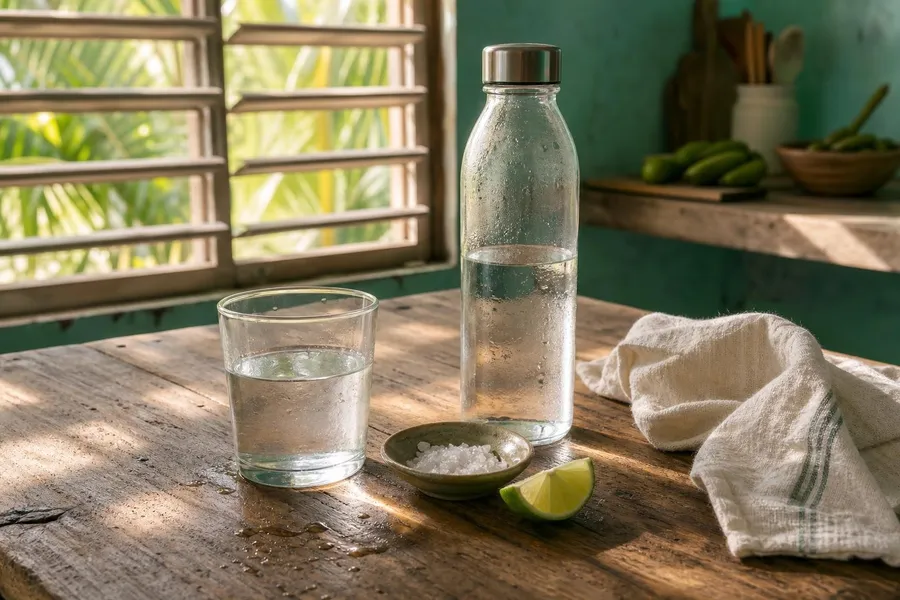
What is dehydration? Dehydration is a shortage of body water and essential salts that happens when you lose more fluid than you take in. In Belize’s heat, especially when humidity is high, the body may sweat heavily but cool down less efficiently, so early dehydration signs you should not ignore in Belize's heat include dry mouth, dizziness, dark urine, headache, unusual tiredness and reduced urination. This guide explains how to spot mild, moderate and dangerous dehydration, what to do first, when to seek medical care, and how to reduce risk at work, school, home, on the cayes, and during outdoor activities.
Quick summary
Early warning signs: thirst, dry or sticky mouth, darker urine, headache, tiredness, dizziness and muscle cramps.
Higher-risk situations: working in the sun, exercising, fishing, farming, construction, carnival or sporting events, diarrhoea, vomiting, fever and alcohol use.
Act early: move to shade or an air-conditioned space, sip fluids, loosen tight clothing and rest.
Use oral rehydration solution when needed: ORS is useful when fluid loss comes with diarrhoea, vomiting, heavy sweating or poor food intake.
Get urgent help: confusion, fainting, very little urine, rapid breathing, inability to drink, persistent vomiting or signs of heat stroke are emergencies.
Why dehydration can develop quickly in Belize
Belize’s climate makes dehydration a practical everyday health concern, not only a problem for athletes. The National Meteorological Service of Belize describes the country as warm and humid, with clear wet and dry seasons and rainfall patterns that vary by district. Coastal communities may feel a sea breeze, but humidity can still slow sweat evaporation. Inland areas such as Cayo and parts of Orange Walk can feel hotter during the day, especially when people are away from shade.
Humidity matters because sweat cools the body mainly when it evaporates. When the air is already moist, sweat may stay on the skin, making you feel wet without cooling you well. You may keep losing fluid while not realising how much your body is working. That is why people can become dehydrated even on a cloudy day, after a short walk, or while travelling by boat, bus or pickup.
The risk rises during heat waves, late dry season conditions, long outdoor shifts, school sports, outdoor markets, tourism activities, farm work, construction and fishing. Children, older adults, pregnant people, people with kidney or heart conditions, and anyone taking water pills or certain blood pressure medicines should be extra careful.
Dehydration signs you should not ignore
The body usually gives warning signs before dehydration becomes severe. The trouble is that many early symptoms are easy to dismiss as “just heat”, “just tiredness” or “a little headache”. In Belize’s climate, it is safer to treat early signs seriously, especially if they appear during or after sun exposure.
Common early signs
Dry mouth, dry lips or a sticky feeling in the mouth.
Thirst that keeps returning soon after drinking.
Dark yellow urine, strong-smelling urine or urinating less often than usual.
Dizziness, light-headedness or feeling weak when standing.
Headache, irritability, tiredness or difficulty concentrating.
Muscle cramps in the legs, arms, belly or back after sweating.
One sign alone may not prove dehydration, but a cluster of symptoms after heat exposure should prompt action. A practical rule is to check both how you feel and how often you are urinating. If urine is getting darker and you feel dizzy or weak, do not wait until symptoms become severe.
Mild, moderate and severe dehydration compared
Dehydration is easier to manage when it is mild. Once it becomes severe, the body may not be able to correct the problem with drinking alone. The table below gives a simple way to understand the difference, but it does not replace a health worker’s assessment.
Level | Possible signs | What to do |
|---|---|---|
Mild dehydration | Thirst, dry mouth, slight headache, darker urine, mild tiredness. | Rest in shade, sip water or ORS, avoid alcohol, pause strenuous activity. |
Moderate dehydration | Dizziness, weakness, muscle cramps, very dark urine, reduced urination, nausea. | Stop activity, cool the body, use ORS if appropriate, monitor closely and contact a clinic if not improving. |
Severe dehydration or heat emergency | Confusion, fainting, inability to drink, little or no urine, rapid pulse, hot skin, persistent vomiting. | Call 911 or go to the nearest emergency department. Begin cooling while waiting for help. |
What your urine colour can tell you
Urine colour is one of the easiest day-to-day clues. Pale yellow urine often suggests that fluid intake is adequate. Dark yellow or amber urine can mean the body is conserving water. If you are urinating much less than usual, or not at all for many hours, that is more concerning.
There are limits to this test. Vitamins, some medicines, certain foods and medical conditions can change urine colour. Also, a person with kidney disease, diabetes or urinary problems should not rely on urine colour alone. Still, for most healthy adults, checking urine colour during hot days is a useful habit.
Practical urine check
Check the colour during the day, not only first thing in the morning.
Notice whether you are passing urine less often than normal.
If urine is dark and you feel weak, dizzy or crampy, take a cooling and hydration break.
If you cannot pass urine, feel confused or cannot keep fluids down, seek urgent medical care.
What to do at the first signs of dehydration
Early action can stop dehydration from becoming a medical emergency. The goal is to replace fluid, reduce heat stress and give the body time to recover. Do not chug a large amount of fluid all at once if you feel nauseated. Small, steady sips are usually easier to tolerate.
First steps
Move out of direct sun into shade, a breezy area or an air-conditioned room.
Loosen tight clothing, remove unnecessary layers and cool the skin with a damp cloth if available.
Sip water, coconut water without added alcohol, or an oral rehydration solution.
Pause exercise or work until dizziness, cramps and weakness improve.
Ask someone to stay with you if you feel faint, confused or unusually weak.
If symptoms do not improve after rest and fluids, or if they return quickly when you stand or walk, contact a health centre, clinic or doctor. In Belize, the Ministry of Health & Wellness hotline 0-800-664-2273 can help direct people to health information, but emergencies should be handled through 911 or the nearest emergency service.
Water, ORS and sports drinks: what is best?
Plain water is appropriate for many mild cases, especially if you are otherwise well and have eaten normally. However, when sweating is heavy or fluid loss comes with diarrhoea or vomiting, the body may also lose salts. In that situation, oral rehydration solution can be more suitable because it contains a balanced mix of salts and glucose that helps the body absorb fluid.
ORS packets are commonly sold in pharmacies and clinics, often at a modest cost in Belize dollars. Always follow the packet instructions exactly and mix with safe water. Do not make it stronger “for more effect”, because that can worsen stomach upset or salt imbalance.
Fluids to limit during heat stress
Alcohol, including beer, rum drinks and cocktails, because it can increase fluid loss and affect judgement.
Very sugary drinks, which may worsen nausea or diarrhoea in some people.
Too much caffeine if it replaces water or makes you urinate more often.
Unknown homemade mixtures with too much salt, sugar or concentrated powders.
Who is most at risk in Belize’s heat?
Anyone can become dehydrated, but some people need extra attention. Outdoor workers may lose fluid over many hours, especially if breaks are short or water access is limited. Tour guides, fisherfolk, farmers, construction workers, vendors, traffic officers and sanitation workers may be exposed to sun and reflected heat from roads, boats or zinc roofing.
Babies and small children can dehydrate quickly because their bodies are smaller and they may not communicate thirst clearly. Older adults may feel thirst less strongly and may already be taking medicines that affect fluid balance. People with diabetes, kidney disease, heart disease, high blood pressure, fever, diarrhoea or vomiting should take dehydration signs seriously.
Visitors also face risk. A tourist who arrives from a cooler climate may spend long hours snorkelling, hiking, cycling or drinking alcohol without adapting to the heat. Belize residents can be caught too, especially during busy workdays, festivals, football matches or long trips between districts.
Heat exhaustion, heat stroke and dehydration are connected
Dehydration and heat illness often overlap. Dehydration reduces the body’s ability to sweat and circulate blood effectively. Heat exhaustion may show up as heavy sweating, weakness, dizziness, nausea, headache and cramps. A person may look pale or clammy and may need immediate cooling and fluids.
Heat stroke is different and far more dangerous. It can involve confusion, collapse, seizures, very hot skin, loss of consciousness, or a body that is no longer able to cool itself. Heat stroke is a medical emergency. Do not try to manage it at home with drinks alone. Call 911, move the person to a cooler place, remove excess clothing and cool the body with water, fans or wet cloths while waiting for help.
If a person in the heat becomes confused, faints, cannot drink, stops urinating or keeps vomiting, treat the situation as urgent.
How to prevent dehydration during hot days
Prevention works best when it is planned before the hottest part of the day. Do not wait for strong thirst. In Belize, a safe routine often means drinking regularly, choosing shade whenever possible, and adjusting activity around the sun.
Daily prevention habits
Start the day hydrated, especially before work, school sports, fishing trips or long travel.
Carry a refillable bottle and drink small amounts often.
Use hats, light-coloured clothing and shade during outdoor tasks.
Schedule heavy work earlier in the morning or later in the afternoon when possible.
Take cooling breaks before dizziness or cramps start.
Check on children, older neighbours and people living alone during very hot spells.
Food also helps. Meals with fruits, soups and normal salt intake can support hydration. If you are on a salt-restricted diet because of blood pressure, kidney or heart problems, follow your clinician’s advice rather than increasing salt on your own.
When to seek medical help
Some dehydration can be handled early with rest and fluids, but certain signs need professional care. Seek medical help if a child has diarrhoea with signs of dehydration, if an older adult becomes unusually sleepy or confused, or if a person cannot keep fluids down. People with chronic medical conditions should act sooner because dehydration can make existing problems worse.
Emergency warning signs
Fainting, collapse, seizure or confusion.
Very little or no urine, especially with weakness or dizziness.
Persistent vomiting or severe diarrhoea.
Fast heartbeat, rapid breathing or chest pain.
Hot skin, worsening headache, high fever or signs of heat stroke.
A baby with no tears when crying, dry mouth, sunken eyes or unusual sleepiness.
For urgent medical problems in Belize, call 911 or go to the nearest emergency department. For non-emergency health guidance, use local clinics, health centres, pharmacists or the Ministry of Health & Wellness contact channels.
Common mistakes to avoid
Many dehydration cases worsen because early symptoms are normalised. In a hot climate, “I just need to push through” can be risky. The safest approach is to stop early, cool down and rehydrate before symptoms intensify.
Waiting until you feel extreme thirst before drinking.
Ignoring dark urine because you feel able to continue working.
Using alcohol as a “refreshment” during a very hot day.
Mixing ORS packets with too little water.
Leaving children, older adults or pets in parked vehicles, even briefly.
Assuming cloudy weather means dehydration cannot happen.
Frequently asked questions
What are the first signs of dehydration in Belize’s heat?
Common first signs include thirst, dry mouth, headache, tiredness, dizziness, darker urine and urinating less often than usual.
Is dark urine always dehydration?
Not always. Vitamins, medicines and some foods can change urine colour. But dark urine with thirst, dizziness or heat exposure is a useful warning sign to drink fluids and cool down.
Should I drink water or ORS?
Water is usually fine for mild thirst and routine hydration. ORS is more useful when there is diarrhoea, vomiting, heavy sweating, cramps or poor food intake.
Can coconut water prevent dehydration?
Plain coconut water can contribute to fluid intake, but it is not the same as properly mixed ORS when dehydration is linked to diarrhoea, vomiting or significant salt loss.
When is dehydration an emergency?
It is urgent if there is confusion, fainting, inability to drink, persistent vomiting, very little urine, seizure, rapid breathing or signs of heat stroke.
Are children more at risk?
Yes. Children can dehydrate quickly and may not explain symptoms clearly. Watch for dry mouth, no tears, sunken eyes, unusual sleepiness and fewer wet diapers or bathroom trips.
Can I keep working if I feel dizzy but drink water?
No. Dizziness in the heat is a sign to stop, rest in shade, cool down and rehydrate. Continuing heavy work can lead to heat exhaustion or worse.
Who should be extra careful during hot weather?
Older adults, babies, pregnant people, outdoor workers, athletes, people with fever, diarrhoea or vomiting, and people with kidney, heart or blood pressure conditions should be especially cautious.
Conclusion
The main dehydration signs you should not ignore in Belize’s heat are dry mouth, thirst, dizziness, headache, muscle cramps, dark urine and urinating less than usual. These symptoms can appear before dehydration becomes serious, especially when humidity is high or outdoor activity lasts for hours.
The best response is simple but timely: move to shade, cool the body, sip fluids, use ORS when fluid and salt loss are likely, and stop strenuous activity until you recover. Do not delay care if symptoms are severe, if a child or older adult is affected, or if there are signs of heat stroke. Paying attention early can prevent a manageable hot-day problem from becoming a medical emergency.
Sources
National Meteorological Service of Belize: Climate Summary
Ministry of Health & Wellness Belize: Contact and health information portal
World Health Organization: Oral rehydration salts guidance
U.S. Centers for Disease Control and Prevention: About heat and your health
Belize Police Department: FAQ about 911