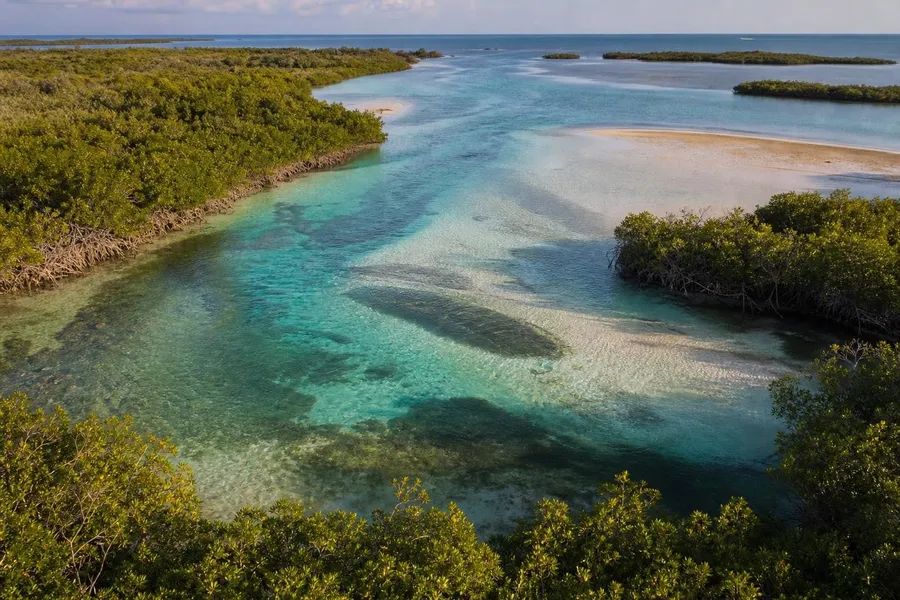
Belize's mangroves matter to the coastline because they work like a living sea wall: their salt-tolerant roots hold mud and sand in place, slow waves, shelter young marine life and reduce erosion after storms. From Corozal Bay to the Sarstoon, and around cayes such as Ambergris Caye, Turneffe and South Water Caye, mangroves are part of the natural infrastructure that helps keep Belize’s coast, fisheries and tourism economy standing. This article explains what mangroves are, how they protect shorelines, why they are vital for fishers and coastal communities, what threatens them, and what residents, developers and visitors can do to help protect them.
Belize's mangroves protect land: their roots trap sediment, reduce erosion and soften the force of waves and storm surge.
They support fisheries: mangrove roots provide nursery habitat for juvenile fish, lobster, conch-associated food webs and other coastal species.
They help climate resilience: healthy mangrove forests store blue carbon and help coastal communities adapt to stronger storms and sea-level pressure.
They are regulated: clearing, trimming or altering mangroves in Belize normally requires proper authorisation under national mangrove protection rules.
What are Belize's mangroves? Belize's mangroves are coastal trees and shrubs adapted to salty, waterlogged and low-oxygen conditions. They grow in the intertidal zone where land and sea meet, using specialised roots and salt-management systems to survive in places where most trees cannot. In Belize, mangroves are found along mainland shores, river mouths, lagoons, wetlands and cayes, forming a living buffer between the Caribbean Sea and coastal settlements.
Where mangroves grow along Belize’s coastline
Mangroves occur across much of Belize’s coastal zone, from the northern lagoons and Corozal Bay area to the southern coast near Toledo. They also fringe many cayes and atolls, where land is low, sea exposure is high and natural shoreline protection is especially important. In some places they form a narrow green edge; in others they develop into broad wetlands with dwarf mangroves, savannah-like formations, mixed mangrove forest and taller stands.
The Coastal Zone Management Authority and Institute describes Belize’s coastal habitats as connected systems. Mangroves, seagrass beds and coral reefs do not work separately. Mangroves trap sediment and provide shelter near shore, seagrass beds stabilise shallow bottoms, and reefs reduce wave energy farther offshore. Together, they help maintain the physical and ecological health of the coast.
Main mangrove types found in Belize
Mangrove type | Where it is usually found | Why it matters to the coast |
|---|---|---|
Red mangrove | Closest to the water, often along cayes, lagoons and shorelines | Prop roots slow waves, trap sediment and shelter juvenile fish |
Black mangrove | Slightly inland from red mangrove, in muddy or salty soils | Breathing roots help stabilise soil and support wetland structure |
White mangrove | Higher parts of the mangrove zone and back mangrove areas | Adds canopy cover, habitat and a transition toward drier coastal land |
Buttonwood | Edges of wetlands, coastal thickets and slightly higher ground | Acts as a mangrove associate that strengthens the wider coastal vegetation belt |
How mangroves hold the shoreline together
The most visible coastal benefit of mangroves is their root system. Red mangrove prop roots form a tangled frame above and below the water. Black mangroves send up small breathing roots, called pneumatophores, from the mud. These structures slow moving water, reduce wave energy and allow suspended sediment to settle instead of washing away.
Over time, this process helps build and hold land. Mangroves do not stop every flood or hurricane impact, but they reduce everyday erosion and can soften storm-driven waves before they reach homes, roads, docks and tourism properties. This is especially important in Belize because many coastal villages and island communities sit on low-lying land where even small losses of shoreline can become costly.
Hard structures such as seawalls may be necessary in some places, but they can also reflect wave energy and worsen erosion nearby if poorly designed. Mangroves are different because they absorb energy, grow, repair themselves after moderate disturbance and provide habitat at the same time. For many sites, the best coastal defence is not a wall alone, but a planned combination of setback, drainage, careful construction and living shoreline protection.
Why roots matter after storms
After a tropical storm or hurricane, shorelines without vegetation are more likely to lose sand, mud and topsoil. Mangrove roots keep some of that material locked in place. Fallen leaves, small branches and organic matter also add to the soil, helping wetlands recover. Where mangroves remain healthy, the coast has a better chance of rebounding naturally rather than needing repeated, expensive repairs.
Why mangroves are important for fish, lobster and local livelihoods
Belize’s fisheries depend on healthy coastal habitats. Mangrove roots create calm, sheltered spaces where young fish and invertebrates can hide from predators, feed and grow before moving to seagrass beds, reefs or deeper water. This nursery role helps support commercial and subsistence fishing, as well as sport fishing and reef-based tourism.
For coastal communities, the value is practical. A strong mangrove system can mean more juvenile snapper, grunts and other reef-associated fish surviving to adulthood. It can also support the broader food web connected to lobster, conch grounds and reef species. When mangroves are cleared for short-term views or poorly planned development, that nursery space shrinks, and the loss may be felt by fishers long after the trees are gone.
Tourism also benefits. Visitors come to Belize for the reef, cayes, wildlife, fly-fishing flats, birding and quiet coastal landscapes. Mangroves support all of those experiences by keeping water clearer, providing habitat for birds and marine life, and helping protect the beaches and cayes that attract travellers.
Mangroves, blue carbon and climate resilience
Mangroves are often described as a blue carbon ecosystem because they store carbon in their trunks, roots and, most importantly, deep wetland soils. When a mangrove forest is left intact, much of that carbon remains locked away. When it is cleared, drained or filled, stored carbon can be released and the coast loses a natural climate buffer.
Belize has recognised this value in its climate commitments. National targets include increasing protection for mangroves and restoring degraded mangrove areas by 2030. These goals matter because climate resilience is not only about reducing emissions. It is also about protecting communities from stronger rainfall, storm surge, sea-level rise and coastal erosion.
For Belize, mangrove protection is a practical adaptation strategy. It supports coastal safety, fisheries, tourism, biodiversity and carbon storage at the same time. That combination makes mangroves one of the country’s most valuable natural assets, even where they appear to be only bushy wetlands at the edge of the sea.
What threatens Belize's mangroves
Mangroves are hardy, but they are not indestructible. The biggest pressure in many coastal areas is land conversion. Clearing for subdivisions, tourism facilities, marinas, roads, seawalls and beach access can remove the very vegetation that keeps the shoreline stable. Dredging and filling can change water flow, bury roots and disrupt the balance of salt and freshwater that mangroves need.
Unpermitted clearing: cutting or removing mangroves without approval can damage habitat and expose land to erosion.
Poor drainage and filling: blocking tidal flow can weaken or kill mangrove stands.
Pollution and sediment runoff: wastewater, oil, chemicals and heavy sediment loads can affect mangrove and nearshore health.
Storm damage: hurricanes can break branches, topple trees and reshape wetlands, especially where forests are already stressed.
Sea-level rise: mangroves need space to move inland; roads and buildings can trap them against the water.
Rules and responsible development in Belize
Belize has specific mangrove protection regulations under the Forests framework. In practical terms, a landowner, investor or contractor should not assume that mangroves can be cleared simply because they are on or beside a parcel of land. Cutting, trimming, dredging, filling or altering mangrove areas can require a permit and may be subject to conditions, mitigation or refusal.
Responsible development starts before design drawings are final. A site plan should identify mangrove areas, drainage paths, low-lying zones, storm exposure and nearby seagrass or reef habitats. Setbacks, boardwalks, raised structures and limited access points can reduce damage while still allowing sensible use of coastal property.
Questions to ask before changing a shoreline
Are mangroves present on the property or directly beside it?
Will the work block tidal flow, drainage or fish passage?
Has the relevant permit or environmental clearance been obtained?
Can access be provided by a small pier, boardwalk or raised path instead of clearing a wide strip?
Is there a plan to restore damaged mangroves or replant suitable areas?
How communities and visitors can help protect mangroves
Mangrove protection is not only a government issue. Residents, tour guides, fishers, students, property owners and visitors all influence how coastal habitats are treated. In small communities, early reporting and local stewardship can prevent small clearings from becoming major losses.
Simple actions matter. Avoid dumping garbage or oil near wetlands. Use established channels and docks rather than cutting new paths through roots. Support tour operators and accommodations that respect mangrove setbacks. If you are buying or developing coastal land, treat existing mangroves as an asset, not an obstacle. They may protect the value of the property better than a cleared view ever could.
Schools and community groups can also support restoration, but planting should be done carefully. Mangroves survive only where elevation, salinity, wave exposure and water flow are suitable. The right approach is not simply putting seedlings anywhere. Successful restoration often begins by fixing the conditions that caused mangroves to fail, such as blocked water movement or repeated disturbance.
Common misconceptions about mangroves
One common misconception is that mangroves are wasteland. In reality, they are working wetlands that provide shoreline protection, fisheries habitat, carbon storage and biodiversity benefits. Another misconception is that removing a narrow strip will not matter. On small cayes and low coastlines, even a narrow strip may be the main defence against erosion.
Some people also believe mangroves create dirty water. Healthy mangroves usually do the opposite: they trap sediment and help filter runoff before it reaches seagrass and reef areas. Bad smells or poor water quality often come from stagnant drainage, sewage, rubbish or altered water flow, not from the mangroves themselves.
A healthy mangrove edge is not wasted waterfront. It is coastal protection, fish habitat and climate resilience growing in one place.
Frequently asked questions
Why are mangroves important to Belize’s coastline?
They reduce erosion, trap sediment, slow waves and help protect low-lying coastal land from storm surge and everyday wave action.
Do mangroves stop hurricanes?
No. Mangroves cannot stop a hurricane, but healthy stands can reduce wave energy, limit erosion and help shorelines recover after storms.
What animals use mangroves in Belize?
Juvenile fish, crabs, lobster-associated species, birds, reptiles and many small invertebrates use mangroves for shelter, feeding and breeding habitat.
Can mangroves be cut if they are on private land?
Private ownership does not automatically allow mangrove clearing. In Belize, cutting or altering mangroves can require official permission and may be restricted.
Are mangroves good for tourism?
Yes. They support clear water, fisheries, wildlife viewing, sport fishing and the natural beauty of cayes and coastal lagoons.
What is blue carbon?
Blue carbon is carbon stored by coastal and marine ecosystems such as mangroves, seagrass and salt marshes, especially in their soils.
Is planting mangroves always the best solution?
Not always. Restoration works best when the site has the right water flow, elevation and salinity. Sometimes the first step is to remove the cause of damage.
How can visitors help protect mangroves?
Visitors can avoid damaging roots, use responsible tour operators, keep rubbish out of waterways and respect signs or rules in protected areas.
Conclusion: Belize’s coastline needs its mangroves
Belize's mangroves are essential to the country’s coastline because they join several benefits in one living system. They hold shorelines together, shelter young marine life, support fisheries and tourism, store carbon and soften storm impacts. For a country with low-lying cayes, coastal villages and valuable marine ecosystems, that protection is not optional.
The key lesson is simple: keeping mangroves healthy is usually cheaper and wiser than trying to replace them after they are gone. Good planning, proper permits, community stewardship and restoration where suitable can help Belize protect both its coast and its coastal economy. A mangrove fringe may look quiet, but it is actively working every day for the shoreline.
Sources
Coastal Zone Management Authority and Institute: State of the Belize Coastal Zone Report 2003-2013
Forest Department of Belize: Forests (Protection of Mangroves) Regulations
World Resources Institute: Belize: Shoreline Protection from Mangroves
Government of Belize and UNFCCC: Belize Updated Nationally Determined Contribution
Belize Fisheries Department: Ecosystem Management Unit